Showing posts with label kathmandu. Show all posts

Thursday, February 03, 2011

Escape from Kathmandu: Top 5 Urban Oases


Escape from Kathmandu is a book by Kim Stanley Robinson, which I saw constantly while in the city, and never read. 

It's also something you'll want to do frequently while living and working in Kathmandu. The city has its share of magic, but more than its share of air and noise pollution. The Mountain 'Du is a perfect example of how increased "prosperity" can actually made a place less liveable.  An increasing number of  personal vehicles on the road, paired with zero emissions laws and aggressive "horning" habits have turned the pagoda-filled valley into a smoggy cauldron. Increased political awareness and labour organization mean more frequent garbage strikes, with mini-Mount Trashmores accruing on every other corner.  Negotiating the obstacle course of a Kathmandu street can provide great practice for rural trekking.

Fortunately, behind its traditional brick-masonry walls, Kathmandu hides a number of gracious courtyards where soothing fountains flow, sunlit gardens quietly thrive, and iced drinks are served in the shade.  The "valley of Shangri-La" was thought to be a hidden paradise amongst craggy mountains; similarly, these urban oases offer respite from the grime.

1.   Hotel Shangri La Shambala Gardens:  Along with the Yak and Yeti, Shangri-La is the old, established face of genteel higher-end Kathmandu tourism. The Shambala garden, designed by artist and Nepalophile the late Desmond Doig, serves Illy coffee imported from Italy and seemingly endless sunny days.  Spotless white parasols provide shade on the lawn, or you can take refuge from the sun in the glassed-in terrace. The swimming pool is available to outsiders on weekends, and Shangri La's restaurant serves decent Indian, Nepali and continental food. 

2.   To step off noisy Gaushala (the name means "Cow shelter") and enter the gates of Dwarika's heritage hotel is to truly experience another city within the city.  Dwarika Das Shrestha devoted his life to collecting the intricate hand-carved wooden pieces being discarded by Kathmandu's modern property developers, not knowing what he'd ever do with them, but sensing their innate value.  His hobby eventually became this hotel, which doubles as a museum for Newar art heritage.  The complex manages to be enormous and intimate simultaneously, and each room feels individually appointed and hand-crafted.

Dwarika's is located rather out of the way, unless you are on your way to either Pashupatinath or the airport, but is well worth the taxi ride.  As a true star hotel, Dwarika's offers no less than three restaurants - the main terrace with its adjoining (and icily air-conditioned Library Lounge), the Fusion bar and restaurant, (which serves a mean Lychee-flavoured frozen margarita), and Krishnarpam, where traditional Newar maharajah's meals ranging from six to twenty-two courses are served (must be ordered in advance).   If you're on a budget, stick to the lemon cheesecake and the iced tea, which with its cinnamon-lemon-mint flavours, has to be some of the best in the world


3. Kantipur Temple House is less illustrious than Dwarika's, but with its central Thamel location, far more convenient for most travelers. A stroll down the labyrinthine streets toward the neighborhood known as Jyatha will bring you to the courtyard of the Temple House, where you can easily alternate between the cool shade of the interior or the soothing sun of the gardens.  KTH prides itself on being entirely eco-friendly, using no disposable plastics and furnished entirely with locally crafted products.  It's perfect walking distance from both the busy Kantipath main road and the historic locations of Durbar Square, Hanuman Dhoka, Swayambhu and Ason Tol. 

4Garden of Dreams was concocted in the 1920s as a classic Victorian "folly" of Field Marshall Jung Bahadur "Kaiser" Shamsher (namesake of the neighborhood, Kaiser Mahal), during a phase in Nepali history when local rulers were smitten with European tastes and trends.  The soi-disant "Kaiser" made mini-Versailles with pavillions and environments representing the six traditional Nepali seasons (spring, summer, monsoon season, early autumn, late autumn, and winter).  After his time the garden's gazebos, fountains, statues and cupolas fell into disrepair, and were recently (2006) restored by Goetz Hagmuller and the tireless Austrian team of art historians who also organized the Patan Museum.  Though only three "seasons" could be saved (others having long since been demolished to make way for lucrative tourist properties), the Garden's tasteful blend of neo-classical, traditional Nepali, and modern features live up to the name.  Entrance is 180NRs for foreigners or, for long-termers, a mere 2000Nrs for annual unlimited membership (about $30 US).

5.  Hotel Nirvana Garden is another pleasant surprise within Thamel, all the more so for its proximity to the hustle and the high-decibel rock music that pervades the area from 8pm to the wee hours.  A lush garden with waterfall and noisy frog pond will soothe your traffic-shredded ears. It's located just round the corner down a backstreet from the world-famous Kathmandu Guest House.

A personal favourite (and round the corner from my flat) is the restaurant Tushita (translation: place of contentment).  The coffee is good, the food mediocre; but its traditional Brahmastanam architectural structure is uplifting and spacious, with plenty of cool corners to hide in, and free wi-fi.  The real heart of Tushita is "Dai," a senior Newar gentleman unfailingly atted in flawless topi-daura-surwal, who performs Buddhist pujas daily in the lower courtyard. Tushita also has an unadvertised, small guest house with a loyal following in the garden behind the restaurant.

There are still more hidden gems - Babar Mahal Revisited, Mike's Breakfast, Cafe Imago Dei, and the gardens of the sequestered Hotel Vajra. Gritty on the surface, modern Kathmandu secretly retains the laid-back ways that made Nepal so popular with road-weary backpackers 1970s hippie overland days.  


Saturday, October 09, 2010

Meanwhile, back in the Valley

Harvest Home
Body in NYC, mind in Nepal

I'm sitting in an East Village cafe, watching the corner grocery try to array produce in an attempt at a "harvest season" display.  Somewhere, outside of Manhattan's concrete canyons, leaves are changing colour, chrysanthemums are blooming and roadside stands are setting out sheaves of Indian corn and piles of pumpkins.  And all over Nepal, it's Dasain time - the nine-day festival dedicated to goddess Durga, in her local Nepali incarnation as Taleju Bhavani.  
The narrow streets of Kathmandu's old town are crammed with shoppers buying holiday gifts, and all the accoutrement required for a Nepali Hindu holiday (special food, sweets, and lots and lots of marigolds).  All this under a blazingly blue sky - weatherwise, it's the perfect season to be in Nepal.

This nine-day goddess festival ("Navratri") is celebrated throughout the Hindu world, taking on local characteristics in each region.  In Maharashtra (India), the holiday is called Dussehra, marked by  glowing paper lanterns.  Mysore (in Karnataka, near Bangalore) has its famous Dasara procession complete with elephants, a palace glowing with oil lamps and fairy lights, and the descendant of the former Maharajahs presiding.  On most every street corner in Calcutta, you will find pandals (platforms with decorated deity statues) for Durga, with ceremonies and devotional music ongoing throughout the holiday, till the clay statues are submerged in the Hooghly river on the tenth and final day.  In the Kullu Valley of Himachal Pradesh, the local goddesses are brought down from their respective temples and paraded on palanquins through the town. 

Dasain is the uniquely Nepali form of Navratri. Nepali festivals are tied to the seasonal agricultural cycle, reflecting the centrality of farming in many Nepali communities.  Each of the nine days is full of significance and traditional observances.  On Ghatasthapana, sprouted wheat grains are planted in a pot, and kept in a dark place in the household.  On the tenth day of Dashami, the beautiful spring-green sprouts (called "jamara") are plucked and worn, as a sign of new growth and regeneration, along with "tikka" (the red kumkum powder) on the forehead.

Nepalis having a genius for time-warping, the nine days and nights of Dasain magically extend to two weeks, even a month in some cases. Workers who have migrated from their remote villages to larger towns to find employment are packed onto rickety buses, crossing dusty and bumpy roads to make the pilgrimage home for the festival.  For many, is their one chance in the year to see their family and the old home place.   When a Nepali waiter, for instance, takes leave from his job to go home for Dasain, he returns whenever he returns - between over-capacity buses, unreliable vehicles, transport strikes and poor road conditions, he can't guarantee a definite date of return.  Most Nepali businesses are bound (by tradition as well as the powerful Maoist-led labour unions) to give each employee a full month's salary as Dasain bonus.

Most Nepalis don't consider their Dasain complete without the sacrifice of a goat.  In a traditional Hindu town like Bhaktapur, every house will have blood on the doorstep from the sacrifice, usually done on the ninth day of Navami.

As a visitor to Nepal, Dasain can be frustrating - transportation is crammed full, shops open and close erratically, most government offices (including those for trekking permits) are closed, and tourist restaurants and many hotels are running on a skeleton crew.  The best way to spend Dasain is to relax, forget your goals and travel checklist, befriend some Nepalis and get invited to their home.  You will enjoy  the traditional foods, and receive the blessings of  tikka and jamara from the family elders. 

Don't forget to bring a present (almost anything is appreciated, but sweets are always appropriate), visibly relish the food that is served, and demonstrate real interest in the holiday and its traditions.  For all the breathtaking mountain vistas, everyday life in Nepal is marked by simple pleasures and of course, the ever-present Nepali smile.

Wednesday, September 22, 2010

Wo Is Me

In Patan's Durbar Square
Patan, Nepal 

Every time I visit Patan - usually to see my Charya dance master Raju Sakya, visit a tantric temple, or to check on some Charya ornaments hand-made by traditional artisans, I try to get in a trip to what I call the "House of Wo."


There's no signboard - in any language - over the tiny Newar food shop, which could serve as a textbook illustration of the phrase "hole in the wall," and if you don't know it you're unlikely to stumble upon the dimly-lit shop by chance.  The best way to find it is to go behind the famous Patan Durbar Square Krishna temple and look for Nepalis disappearing into the wooden-door storefront, between a jewelery shop and a bronze sculpture store.

The low ceilings and walls are blackened from decades of cooking smoke.  Strips of meat hang like party streamers, drying from the rafters. The tiny shop is invariably crowded; the few tables are usually filled, so I always sit on a wooden bench,  balancing my paper plate in my lap. 

The House of Wo is a family affair; on most days a voluminous matron sits on a low stool over the cooking stove, administering the sizzling griddle with grave authority and doling out Wo like a living Annapurna, the Hindu goddess of food.  On my most recent visit she was assisted by a younger woman kneading the rice dough. 

"Wo" is a Newar speciality, their version of south Indian Uttappam - a  thick rice-and-lentil pancake. The special Newar addition is pieces of fresh ginger.  Sometimes called "bara," Wo can be made with an egg cracked on top, or with meat, but I love the plain vegetarian version.  Also available are tikka aloo (spicy potatos, a Nepali staple), masala roasted soybeans with cilantro, chickpeas ("channa") and chiura (dry beaten rice, another Newar specialty which tastes like confetti to foreign tongues). 

Bottled soft drinks (like Coca-Cola from India, with the label in Hindi script) are available, but I recommend washing down Wo with Chang, or homemade rice beer. It's mild, smooth, never gives me a headache, and is very cheap.

The locals are invariably amused to see foreigners, and despite the crowded space, you'll be easily roped into a conversation with the characteristic Nepali smiles.  During my sisters' visit from America, we met a gaggle of college students from Koteshwor. They had come all the way from campus to visit the shop so they could pig out  and get a bit tipsy on chang within their student budgets while flirting with classmates. 

You can stuff your face silly at the Wo shoppe for 2 or 3 US dollars.  The crowded environment makes it difficult to enjoy the food with leisure, but the smiles and laughter - not to mention the food - more than make up for it.

I recommend combining a trip to the Patan Museum - which rightfully has a reputation as one of South Asia's finest museums - with a visit to the House of Wo.  Also on the same block of Patan Durbar Square, the Sundhara Hiti (sometimes called the Royal Bath) made famous by a scene in Bertolucci's Little Buddha - has just recently been reopened.

You can enjoy the Museum's luxurious gardens and umbrella'd outdoor cafe, peek at the psychedelic ornamentation of the Sundhara Hiti, then chow down with the locals round the Wo House cookstove.  At dusk the temple bells from Krishna Mandir will serenade you, and bhajans (devotional Hindu hymns)  will begin upstairs in the nearby Bhimsen Stan.  

All this writing about Patan, the City of Artists, reminds me that it's a nice place to spend more than one day. If you're moved to spend the night, try the ultra-cheap, friendly and clean Mahabauddha Peace Guest House in the neighborhood called Mahabauddha, which is walking distance from Patan Durbar Square.

Have an extra glass of chang for me!  After all, in Nepal, "Chang comes from within."

Monday, March 29, 2010

Dakinis of peace

In the summer of 2008, I followed a group of Tibetan protestors in Kathmandu throughout their entire day - preparing banners, moving from their dwelling site to the protest site surreptitiously (Nepal police were expecting protests, so Tibetans in large groups were likely to be waylaid), and rehearsing nonviolent protest techniques.

Previous protests had involved struggle - the shouting demonstrators would approach the Chinese embassy or consulate and refuse to move. Most of the photos I (and so many other photographers) got were the same day after day - lots of pushing, pulling and gnashing of teeth.  Though I very much supported the demonstrators, I felt it was becoming predictable, and righteous anger is difficult to sustain day after day, for several hours, on an organized basis.

Protestors included Tibetan laypersons, always some monks, and usually a few nuns.

One day, there was an unusual number of nuns involved.  That day, the technique changed. The nuns just lay down on the pavement, shrouding themselves with Tibetan Snow Lion flags.  It was so unexpected, even the police started laughing.  Their gentle prostration turned everyone's expectations on their heads.

These nuns were so sweet, shy, and humble. I reflected on their daily lives in the Tibetan Buddhist world. They don't get many of the privileges afforded to the monks, and their education is often just learning to recite and memorize scripture without the higher teachings of philosophy.   Several projects (Kopan Monastery for Nuns in Nepal, and Tenzin Palmo's Dongyu Gatsal Ling Nunnery in north India) have begun to redress this situation, all with the blessings of HH the Dalai Lama. 

In Tibetan tradition,  Dakini (Tibetan Khandro) is a female embodiment of enlightened energy. Some Dakinis are full-fledged deities, but others are semi-divine and wear human bodies."The outer-outer dakini is a dakini in human form. She is a yogini, or Tantric practitioner in her own right." With or without the 'higher' philosophical teachings, the nuns naturally embodied the Enlightened Female Energy - Dakinis of Peace.

Please copy this photo and share it anywhere you like (just don't charge money for it).  Because my computer crashed shortly thereafter, this is the largest file I have for it, and it's too small to sell commercially. But when you look at it, see the Dakinis flying.

Related reading: 
.

Between the babas

Backstage at Babastock
Kathmandu, Nepal


Ever wonder what those sadhus from Durbar Square - the ones who want money for photographs - do when they're not out begging for alms? They chillax backstage at Kathmandu's Pashupatinath Temple, in the babas' ashram.  These shots were taken just after Shivratri, 2009.
Backstage with Baba

Sadhus (male and female - females are called Sadhvis) come from India as well to be at Pashupati for Shivratri.
Tiffin Time for Baba
By tradition, the Nepal government was obliged to provide ganja, or at least subsidize its purchase, for the Hindu holiday Shivratri (which occurs annually in February). The new, non-Royal, non-Hindu government of Nepal may put a stop to that. Last year the newspaper featured reports of complaining Babas - they didn't receive the customary amount of rupees to subsidize the holiday smokfest.

I found the Pashupati Babas - while quite laid-back - to be also rather career-minded. Most of them make a few rupees as photographer's models. They all had the equivalent of press kits - a stash of carefully-preserved photos and even magazine clippings they had appeared in. The fellow below is showing off some of his portfolio.

Monday, January 11, 2010

Meanwhile, back in the Valley

Look what fun I'm missing back in Kathmandu!

This just came in email from the US Embassy of Nepal.

January 10, 2010

Important Security Announcement for American Citizens in Nepal

The Regional Security Office of the U.S. Embassy has informed that
National People's Front demonstrators have formed in key intersections
throughout Kathmandu valley. This morning in Kathmandu and Bhaktapur
cities, protesters set several vehicles on fire. American citizens are
advised against movement via any wheeled vehicles and to monitor the
situation closely on local media outlets. If you must walk somewhere,
please be cognizant of your surroundings and avoid large crowds.

"Wheeled vehicles" -- as opposed to those with four hooves, or something?

Saturday, August 29, 2009

Reconstructive criticism

Dancing in the semi-dark
Kathmandu and Patan

What's "authentic," what's not, who gets to decide that when it comes to "culture"? -Especially when one is a foreign interloper?

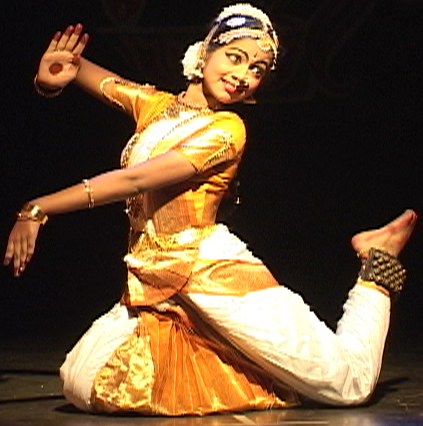
Perhaps it's far from an original question, but it continues to present itself. I continue to learn Newar Charya Nrtya, the Buddhist classical dance of Nepal, and to observe my own reactions to "authenticity," "tradition" and "updation."

Regardless of what the Chennai dance masters will tell you, nearly *all* the Indian "classical dances" were reconstructed from next-to-nothing. (Kerala's Kudiyattam is an exception, I believe, because it was continuously performed without a break in tradition.) That doesn't mean they are not classical, just that they are not as ancient, or entirely as ancient, as often fantasized.

I began to suspect this long ago when my Bharatanatyam teachers had trouble pinning down provenances and answering questions about origins. Given the Indian high esteem for ancient-ness (older the better), this was inconsistent. Being able to cite one's lineage and origin is, almost literally, everything.

(I know "literally" is a very overused word these days, excuse me....)

In trying to revise certain aspects (mostly, the costumes) of Newar Charya Nrtya, I have noticed the same principle applies for the dance that works when observing and learning from Buddhist art.

Sometimes newer is better...because it just looks better. (I know, "better" is a subjective statement. Bear with me.)

That is, the most ancient, "authentic" things sometimes are just too dilapidated to really be of much use. In looking at Buddhist monastery art, it is great to see the oldest paintings...but most of the time, they are barely visible.

Kathmandu and parts of India are full of newly constructed monasteries, some with vivid psychedelic artwork. I can actually get a better idea of forms, shapes and postures from observing and photographing these. It's for the art historians, I suppose, to narrate how the art has evolved. I would like to refer to the oldest artwork available - but it has to be available, and visible.

Are the new paintings "authentic"? They have been painted by modern persons who are students of an ancient, classical art form. "Classical" = there is a particular vocabulary, a canon, of images and styles that are "acceptable."

Until someone decides to throw in something new, that is. I now know this from experience.

Case in point: the costumes (and I know I am not the first - Shahrazad and my friend Margot are at least two that have done the same) that I have decided to revise. True, they are not what the National Academy is using, nor any of the (few) existing Charya dance troupes that I know of. "My" version of the costumes closely follows that of the thangkas, paubha and temple sculpture. So which is more authentic? I'm not Nepali.

When I approached my friend about putting together more "authentic costumes," she responded that there were "no authentic costumes."

Okay, perhaps there are no unchanged costumes handed down in style and form from 500 or 1000 years ago. What I want to achieve is a return, so to speak, to what SCA folks might call *period* materials.

That is, to eschew anything that could not have existed at the time of the dance's origin. (Within reason...I will use Lakme kajal the same way I use red Magic Marker for Bharatanatyam. If they had had red Magic Marker back then, they would have used it. Yes, this is inconsistent! You try using Alta and letting it dry while not getting red stains on your costume!)

This isn't for pedantic reasons...more aesthetic.

The angika abhinaya (body expression) of the basic movements had been obscured, partly by slack standards (where is your tribhangi??) and partly by the billowy costume.

Rather than wearing synthetic satins made in China or India with gold lame border, the original dancers wore veshti. For references, I have been photographing the temple roof struts and sculptures.

Is this nitpicking? Well, the temple sculptures and paintings all depict very specific postures with leg, arm, head and foot positions. If you can't see them, what's the point?

The school of wishful thinking

A return to the ancient, the original, the authentic...this was a big part of the Yuppie ethos, wasn't it? (As the brilliant humourist Cynthia Heimel said in the mid-80s, "You can't just eat maple syrup anymore. It has to be the purest maple syrup made by the cutest little old lady living in the quaintest tiny New England village, completely organic. And limited edition." (paraphrase)

Twenty years later, now that everything seemingly is a copy of a sample of a Xerox of a photocopy of an imitation of a bootleg, it's even more alluring.

"Do they have any dances that are like it used to be 1000 years ago??" my elder sister said on visiting my dance recital at a modern Nashville, Tennessee Hindu temple. I had to say, "not exactly," and watched her enthusiasm falter.

As I may have said before, t's only within the last 30 years that Charya has been performed publicly; previously it was restricted to Newar Buddhist temples. The mudras and songs that are the origin of modern Charya are still performed by the Vajracharya priests today.

An unbroken lineage of any kind is something to be proud of, for sure. But even what is now performed theatrically is not identical with the priestly performances.

Leaders of the New School
Getting Newars in-the-know to talk about this is gradual, hesitant and difficult - perhaps because they don't completely know themselves (only initiates can see most temple dances), perhaps because they hate to disappoint, or perhaps they are unwilling to acknowledge the reversions thinking foreigners will never know the difference.

Some Newars and other Nepalis even indignantly insist that the dance is"meant to be secret" and should not be revealed. If you need an example, just look at the comments on YouTube. "Such things should not be commercialized," one viewer fumed.

Dancers generally have never been known for their material wealth, and I imagine that the other Charya dancers sometimes fervently *wish* that the dance was "commercialized," if only to make a better living. Is merely presenting the dances on a stage, for a pittance, commercializing them?

Then there's the (apparent) fact that the dances, as presented for the past 30 years, are not identical with the esoteric rites. There is no revelation of Tantric secrets in a performance of modern Charya, though I may regret having said that when attempting to get funding for projects.

Even leaving aside the question of inclusion ( it goes without saying that women, not to mention foreigners, did not perform the ritual dances), there have been numerous alterations.

In two years of participation, I made a few practical observations. For one thing, I have seen many Newar bahal monasteries -- the space of many is far too small to perform even a scaled-down version of some modern Charya moves.

For another, I have seen numerous Bajracharya priests - with all due respect, they are unlikely to be performing some of the more acrobatic and yogic poses.

For yet another, the music presented for modern Charya often involves recorded female voices. This wouldn't be possible in traditional Newar practice; the women never did and still do not sing. Many recordings use non-traditional instruments, such as harmonium, and speed up the rhythm or add more percussion to make the song "perform" better.

This was reinforced by a visiting Chicago religion scholar who is studying the dances from a strictly scholarly standpoint. As a non-Newar non-initiate, he also has not seen the dances in the actual temples, but from his interviews with completely different sources than my own, had gathered much the same thing.

As my friend the Tibetan art dealer noted:
"My fake (replica) Khatvanga sold for more than the original one."

Why? was it just at the right place at the right time? Maybe it looked more like a Tibetan khatvanga is "supposed" to. A Tibetan lama would be unlikely to buy such an instrument from an art dealer. The contemporary lay-buyer of a khatvanga (a kind of Tibetan ritual implement - a kind of magic wand) would likely crave a certain aura around the artifact. Is that commercialization?

Maybe the new one really was "better." Or even, in its way, "more authentic."

Thursday, July 09, 2009

We can be superheroes

Just for one day
Kathmandu


The Lalit Kala campus reeks of urine.

That's my overwhelming impression of what should be Nepal's equivalent of the "Kids From Fame" high school. Lalit Kala ("Fine Arts") is a secondary school where classical music, singing, and fine (visual) arts are taught. The building is historic; several generations of Nepali royal court musicians used to house and practice there. But it's terribly dilapidated; the semi-modern toilet installed smack in the middle of the ground floor is only the beginning.

According to Raju who graduated from there 15 years before, absolutely not one thing has changed. Looking round the fine arts and sculpting studios was nothing short of depressing. Dimly lit, dusty, musty rooms; even the grimy brown anatomy skeleton was missing parts.

In case you haven't figured this out yet, money is not a problem in Nepal. There is plenty of money. It all goes into deep pockets! I had to wonder how a student could concentrate on anything, let alone fine arts, with such a reek coming into the old classrooms.

Raju and I performed briefly there on 15 May; we opened the end-of-term classical music show with the "Sodasa Lasya" (Sixteen Graces) item.

In order to dance the approximately 6-minute hymn, we still had to garb up in full Tantric dance gear; all this in one of the empty classrooms with no mirror. But I'm not complaining, it was my first Charya performance of any kind. Raju was dressed in the yellow gown of Manjushree; I wore the red attire of Vajrayogini.

I'm accustomed to 3-hour dressing sessions from Bharatanatyam, and Charya is quite a bit simpler in alankaram (decoration), but still involved:


-under trousers, -choli blouse, -full skirt, -mekhala (deccorative belt), -another kind of overskirt waist-piece, -a big full thavani (top part) that made me feel like a Catholic cardinal, -another top piece that fit around the breastbone, -and lots and lots of jewelery, including:

-Several sets of bangles,
-rings,
-heavy silver anklets,
-bells tied round the knees,
-about five different neckpieces including the tayo or oblong traditional Newari women's piece worn by the Kumari, and
-several strands of fake pearls.

Raju drew a "third eye" on my forehead using a black kajal pencil.

My favourite part is the crown, or muthi, also called kiriti. There are several different crowns meant to be worn for various deities; this time I was wearing the skull-garland crown of VajraYogini. The grinning kapilas look to western eyes very Tibetan, but in fact it's the other way round; Tantric Buddhism with its skull imagery came from India via Nepal before reaching Tibet.

Underneath the crown is a 3-tiered topknot hairpiece; an identical wig is worn by the Tibetan monks when they perform certain lama dances depicting the Dakinis. Then the crown is tied on with black threads in three different places.

The crown looked and felt a lot like a helmet. After donning all this magical bling, I felt like a superhero - cape, implement of power, helmet of invincibility, and shields. I have often mused on the similarity between Hindu deities and the Superheroes. Vishnu particularly seems like Superman (he rests in his Fortress of Solitude when not needed; he incarnates whenever a call for help is heard on Earth, has superhuman strength and takes different forms).

After three false starts (the sound guy couldn't cue the CD right), we finally danced. It is rather un-godly to stand on stage waiting for the music to start.

Somehow I think Kathmandu needs all the cutting-through energy of Vajrayogini to eliminate the corruption that allows a noble institution like Lalit Kala to fall into such decay.

 Related reading:
Gods, Men and Territory: Society and Culture in Kathmandu Valley
 The Glory of Nepal: A Mythological Guidebook to Kathmandu Valley Based on the Nepala-Mahatmya and Himavatkhanda 

Monday, July 06, 2009

I'm back, sort of

Temple of the Sword-Wielding Goddess
Sankhu, Kathmandu valley

Ack, I am suffering from what has become my annual Monsoon Illness. Somehow, hard as I try, it gets me every July that I stay in Nepal. I have got to get out of here earlier next year.


Here are a few photos from my visit to the atmospheric, remote temple of the KhadgaVajrayogini
at Sankhu village, on the eastern edge of the Kathmandu Valley.


'Sankhu Vajrayogini' is one of the four guardian Vajrayoginis ("Adamantine Goddess") that stand watch over the Valley. The other three sisters are found at Pharping, Guhyeswari (foreigners not admitted), and Swayambhu at Bijeshwori.

I hope to make a complete tour (via bicycle) of all four Yogini temples and post a yatra-logue about the whole thing.

Photos of the murti were not permitted, but I found the people up at Sankhu temple to be welcoming and very, very proud of their goddess. The young girl below (who spoke excellent English) explained to me simply, "She is our Mother."

Wednesday, May 27, 2009

Independent, Indigenous, International

In Kathmandu

The Nepal International Indigenous Film Festival opens tomorrow. Here's the website and schedule.

Screenings will be at Bhrikutimandap - the Nepal Tourism Board hall and the City Hall, across the road from one another. (I think it's also called Pradarshini or Exhibition Road.) Films run through Sunday, May 31.

Admission is a refreshing 30NRs (about fifty cents) with a discount for card-carrying students.

I'm looking forward to entries about the Lepcha (the original peoples of Sikkim) and the Saami of "Lapland," said to be the last Caucasian peoples living a tribal lifestyle.

Wonder if I can crash the opening ceremony ("for invited guests only")?

Nepal ra Buddhadharma ko blog chha

Just found a Buddhist blogsite with an incredible sidebar of Buddhist online resources. Yes, they (Enlightenment Ward) do link yours truly, somewhere down on the sidebar.

More relevant and regionally-related blogs - these should give some windows into what daily life "looks like" over here, in the city at least.

Mikel Dunham: I was really pleased to find this site; the author of Buddha's Warriors evidently lives here in the Mandu and is a very active commentator on contemporary Nepal including Nepolitics.

Morten Svenningsen: Tireless documentor of daily life including protests, bandhs, shutdowns and so forth here in Kathmandu.

Roaming Redde: my friend Rene's daily adventures living and teaching English among Tibetan monks here in Boudha.

Snow Lion Foundation: All-Tibet all the time website; news, articles and blog.

You're Welcome!

Monday, May 25, 2009

Nesting

No, I haven't written here for nearly a month. I have been (among other things) "shifting" to the long-overdue new flat, and there's no net there yet (it was of course supposed to be there, promised to be there, and now isn't; so what else is new. Installing my own router will cost some 1800NRs per month -plus down payments - another hidden expense).

The new place is very high and dry; 4th floor, lots of windows and sun and air. I call it the Cuckoo's Nest.

The sheer amount of plastic required to set up a household these days is really dismaying. Garbage bins, sponges, scrub brushes, coat hangers and so forth all involve investing in the dread substance. (I tried having a kitchen rubbish bin made of something else...not nice. And metal is about three times the price.)

Then there are the cleaning items. I looked around the other day and realized how many varieties of scrubbing and cleaning devices I had acquired in 3 weeks:
-floor scrubbers;
-sponges with scrubber only on one side (you know, yellow sponge, green scrubber);
-bottle brush for those hard to reach areas;
-floor rags including both "wet rag" and "dry rag" (we don't normally use mops here);
-two different kinds of handmade straw brooms;
-toilet brush;
-squeegee for the bathroom floor,
-and coconut husks (really, they are good for scrubbing). (Those were FREE at the market.)

Okay, so I am a child of Eisenhower-era parenting. Or maybe it's a result of so many years in south Asia, where the dirt demons prowl.

Then there are all manner of other mundane things I haven't had to think of in literal years, such as hammer & nails, bathmats and doormats, bulletin board, fan, and window screens. It's easy to see how people get bogged down in fixing up their homes. Fortunately, I have limited myself to two rooms. Anything larger, and I may start collecting stuff.

I have yet to figure out the garbage schedule here. One morning a week, a truck comes by and they blow a whistle. Then you're supposed to run down and toss in your bags. You can't leave anything out the night before; there are too many stray dogs.

Drinking water has to be brought in from outside, via the neighborhood corner-store run by a very sweet couple who have Muslim names but seem to be a bit closeted otherwise about faith. (This is unusual here, where everyone wears their faith on their sleeve like people in Tennessee advertise their favourite NASCAR drivers.) A big blue tank of the best-quality drinking water is 90 NRs (like $1.40). I had to put a 500NRs refundable deposit on each tank. A kid with a push-bike delivers the water - the bike is specially outfitted with metal ring holders, like saddlebags, one on each side to hold the tanks.

Cooking gas, and also gas to heat the hot water "geyser," is a bit more pricey. It's 4500Nrs deposit (refundable) on the heavy red-metal cylinders that dispense life-giving fire here. The actual propane contents of the cylinder are 1100 Nrs or so per tank.

Then, I still had to come up with an actual gas stove. This runs anywhere from 2000Nrs to 4000 or so. I can't help wondering how average Nepalis, who make perhaps 2500 Nrs a month, come up with these deposits. That explains the kerosene cook stoves owned by the very poor (much cheaper than propane).

But, Thank Gods (there are lots of them to choose from here) the power is mostly back, and the rains appear to have started. Hope I don't jinx anything by publicly stating this.

Monday, April 06, 2009

Witch hunts and scarlet letters

Ring ring, Pot? this is Kettle calling
From Patan to Pakistan

Even a cursory glance at the Indian media and blogosphere shows people getting pretty uppity about the horrific Pakistan flogging case.

Other South Asians don't have room to talk. All this stuff happens regularly in India, Nepal and Bangladesh, and they don't even usuaily do it "in the name of Islam."

Take last week's case of a Nepali girl - not even in a remote region, but here by the urban centre Kathmandu - accused of witchcraft and tortured. Pyuthar village is within Lalitpur District (very near, if not precisely within, the capitol city)

And that, by a primary school headmaster! If this is what the educators are doing, imagine what the "general populace" are up to, or at very least, what an example that sets for them.

I scoured all the reports I saw, and still could not find an account of what exactly the poor girl had actually done, nor of what exactly she'd been accused of doing ("witchcraft" could mean anything at all, from drawing a design on the ground to being seen with the wrong person).

BK was allegedly tortured by villagers in allegation of practicing witchcraft. BK said she was beaten up, abused and even made to eat human excreta by a group of people in the village.
nepalnews.com Mar 27 09

I am glad, for lack of a better word, that the flogging case is being spotlighted this way - as it deserves. But such treatment is not so unusual, nor restricted to places like Swat Valley. .

Cycle of life

A bicycle built for me
Kathmandu


I rented a bike. wheee!!

This is nothing new - I have rented push-bikes in Pondicherry, Pune, Tanjavore and BodhGaya, and Honda motor scooters in many places. But this is my first rental in Kathmandu (way, way over 'Du) and this time I rented a heavy "road bike" with wide tires to deal with the crap roads here in the city.

Ramakrishna Cycles is a completly unpretentious cycle shop over on Sorakhutte near, but not in, Thamel. Dhruba, the shy kid from Dhading who helped me, rented me an aluminum-frame seven-speed bike. I took it for a week and he bargained a bit on the price, but I love it so much, I think I may have to buy one.

Dhruba offered tea to me and my friend Amy. We sat on the low Nepali woven-straw round stools (they look very African in design, come to think of it) behind the counter. Dhruba and his bike shoppe-mates appeared, and sounded like (from their soft voices and genuine smiles), a bit of unspoilt Nepal. That is, they didn't seem cynical and greedy from too much contact with corruption or gangster culture.

I asked Dhruba the standard opening question about his "native place." Dhading is a town just one hour or so outside Kathmandu, but for all its proximity, its living standards are very remote.

The bike makes locals assume you are filthy rich. If it was just an old made-in-India green push bike, I don't think anyone would notice. A nice multispeed road bike? I was *besieged* by waifs and, at the Kal Bhairav shrine, 'attendans' harassing and insisting that I give money to the god (this, while my hands were folded in prayer).

Anyway, unless you get out very, very early in the morning, the old back streets are useless on the bike - you have to get out and walk anyway. The big, ugly, open modern multi-lane roads are negotiable, but in Asian traffic, no one can hear you scream (or honk or pedal). A bell or horn is a definite must for survival!

Tuesday, March 31, 2009

Vegging out

Where to eat, continued
Kathmandu

Last week was remarkable in that I met two pure vegetarians who were not foreigners. (A foreign Buddhist or yoga person is more likely to be vegetarian than a local Hindu or Buddhist.)

Ravi is a Nepali by way of India (family of Marwari Jains), and Nikesh is an Indian Brahmin who owns a business in Nepal. Naturally, the subject came up: where do you eat?

Most places in town accomodate vegetarians well. But for the purist, there are very few dedicated vegetarian restaurants. In this case, dedicated means not even having meat products on premises. In the strictest sense ("Pure Veg" as they say in south India), it means not even using eggs.

Thamel's Israel-Middle Eastern restaurant, OR2K, is veg but uses lots of egg. Newari and other Nepali restaurants will make a veg set meal, but sometimes cook items in the same pan that's used to cook meat, resulting in ingestion of meat essences and flavours.

With branches in many parts of town (Putalisadak, New Road) and a main hall at Tripureshwor right by Bluebird, Angan is probably the best all-around pure veg restaurant in town. They cover a range of Indian cuisines from North to South to West (Gujarati dhokla!) to East (Bengali sandesh sweets) and have a large, airy, clean dining hall up and downstairs in Tripureshwor. The other locations are more cramped and have more limited selections. Their Rava Dosa Plain is exceptional, the sambar great. They are a branch of (I think) India's Bikanerwala.

Not surprisingly, the pure-veg restaurants in town are all (as far as I know) Indian-owned. My favourite is Trishna Mitai in Lazimpat, before Shangri La. They are Bengali-owned (telltale icon of Dakshineswar over the counter) but do feature good south Indian dishes such as Uttappam and Idly, as well as samosa-chat-chai. I especially like the grandmother who sits in a chair behind the corner and gives me a beautiful smile. She never fails to wear sari and a pure chandan hand-painted tilak.

Two more pure veg Indian shoppes are Dudh Sagar on Kantipath, just opposite Mandala Books (they do have idly, wada, dosa and uttappam!) and Bandar's, a Rajasthani-owned small diner off New Road by Pyukhan Marg. Bandar's may be the only place in town to try Rajasthani Thali.

One Thamel spot that guarantees they use no egg is Shree Lal's House of Vegetarian. Though they seem very sincere, the food I got (dal makhani) was mediocre.

Two more sources of veg food (don't know whether they use egg, though) are the Kopan Monastery canteen way up on Kopan hill, and the Rabsel guesthouse run by Shechen Monastery. In Thamel there's also the old standby Pilgrim's Bookstore Cafe - always shanti, always veg - and the Himalayan Buddhist Meditation Centre cafe which has now moved to Tridevi Marg near Kesar Mahal.

Related reading:


Sunday, March 22, 2009

Dry, dark and dirty

Round midnight
Kathmandu

In a country now famous for having no electricity, how is it that "a short circuit" around midnight caused a serious fire at the Sri Bagalamukhi temple in Patan Sunday night (March 16), destroying much of the carved-wooden pagoda style temple?

""The temple uses too many lights, which can sometime lead to short-circuits,"" an officer at Nepal Electricity Authority's Pulchowk office said."

Minor detail: There's no f**king electricity.

Bagalamukhi, one of the 10 Tantric Wisdom goddesses, is depicted as standing atop a demon, beating him down while snatching his tongue out of his mouth to silence him.

This image is sometimes interpreted as an exhibition of stambhana, the power to stun or paralyze one’s enemy into silence. This is one of the boons for which Bagalamukhi’s devotees worship her.

(her mantra translates as):
...Oh Goddess, paralyze the speech and feet of all evil people. Pull their tongue, destroy their intellect.

Perhaps, the Devi's own comment on suppression of the free press here in Nepal.

Shortly thereafter, the unbearable six-month dry spell finally broke, first with a smattering of rain on Wednesday night. The next day brought nothing but tantalizing rumbles of thunder and dry cracks of lightning. Thursday night, the electricity (which had gone off at 12 midnight) suddenly came BACK on at 12 again, only for a moment...then switched back off.

It wasn't till Friday afternoon we found out that Father John K. Locke, Jesuit scholar and father of Newar Buddhist studies, had died at precisely that time; midnight on Thursday night.

On Friday night I got another unpleasant surprise, in the form of my first Nepali groping. This one was a drive-by - two young men on a motorbike decided to take advantage of their speed and anonymity by grabbing my right breast as they sped past. Such incidents are well known and much-discussed among Indian travellers. Nepal, land of the Buddha and Tantra, is becoming another place where women have to go into Purdah - even in the middle of the tourist zone.

We still hadn't gotten a proper rain till Saturday afternoon, when it finally soaked the thirsty ground thoroughly.

The traditional rain god of the Valley is Rato Matchhendranath ("red lord of the fishes"); his worship is mandatory to bring the much-needed rains. Now that Nepal is "secular," I guess we have to worship Rato Prachandranath. He's the new Red God. Rather than being pulled round in a chariot, he's driven round in a limousine.


Related reading: Chinnamasta: The Aweful (sic) Buddhist and Hindu Tantric Goddess. (book reviews): An article from: The Journal of the American Oriental Society

Wednesday, February 11, 2009

Naya ghar ko puja


At least, I think that is how one would say "New house puja" in Nepali.
On Saturday, Raju and I walked out to Dallu (a neighborhood beneath the famous Buddhist heritage site Swayambhunath stupa) to the home of Sarvaghya Bajracharya, the eldest brother of Raju's dance guru Prajwalratna Bajracharya. (There were six children in the family. At about 40 years, Prajwal Ji is the youngest.)

Sarvaghya is a
Bajracharya by family/caste, and a "guruju" by trade. That is, he is an itinerant Newar Buddhist priest, going round to various Vihars or Buddhist temples (formerly monasteries long ago), performing ceremonies and reading ancient sutras as called upon.


(photo above: Newar Buddhist women prepare to worship the Prajnaparamita sutra at Kwa Bahal, Patan)

It was pitch black on the streets, as has become the norm these days. A few shopfronts stayed open with people congregating round candle
s and oil lamps. As if the people dwelling right on the open sewer of the Bagmati River weren't medieval enough, the lamplights reinforced my feeling that Nepal is going back into literal Dark Ages.

Like most urban Nepali dwellings, the residence was cramped and dark. The dim battery powered light showed the walls painted in a lurid turquoise. Sarvaghya sat on his bed (as guests we were given proper chairs, always a sign of respect). That afternoon, Mr Bajracharya had just been to a conclave of 21 other Bajracharya priests, at the Bidyeshwori temple just up the hill (one of my favourites - the home of AkashYogini or the Flying Space Vajrayogini).

The Buddhist community had honored 21 selected acting priests for their services. He held up a handsomely framed certificate that was in Newari language, but rendered in Devanagiri script, which means that I could sound out the words but had little idea what they meant.

Mr Bajracharya was very quiet, but understood more of my Sanskrit- and Nepali-sprinkled English than he let on. Raju acted as translator but often the priest understood my questions without translation.

I realized this was an ideal person to help inaugurate my new flat, and asked Raju to invite him to perform a New House Puja. He agreed, then we had a discussion about which exact puja of the dozens he knew would be appropriate. Sarvaghya decided something called "Kalasha puja" was ideal. The reason? Tara Puja is great, too, he said, but it is some three hours long. The Kalasha puja is "only" one and a half hours.

"the main aim of the kalasha puja is to make the deity present in the kalasha by means of sadhana and then through the abhisheka of the kalasha bring about participation in nirvana itself." (JK Locke, 1980)

We discussed where to get the necessary ingredients (I gave a 500Nrs -- about $7 USD - advance for the supplies - most likely rice, flowers, incense, various fruits and foods and oil lamps) and added that I wanted to get the classic Newar Buddhist Panch-Buddha signboard, as seen over countless doorways in Patan, to install over the
entrance. Deluxe ones are available on wooden board; more transportable ones are on paper, pasted up like posters and renewed every so often.

I guess I will blend all my South Asian influences and also have the lemon-and-green-chili charm strung up over the doorway, as well as a garland of mango leaves in south Indian style! Oh and don't forget the Kollam. That is going to be one crowded doorway for a few days.

It also remained for me to choose my Ishtadevata (Tibetan "Yidam") or personal protector deity to invoke at the puja. I have to acquire an image (ideally a thangka or bronze statue) to be present. Vajrayogini is my personal favourite, but seemed a bit incendiary for a house-blessing. Maybe Avalokiteshwara, the 1000-armed benevolent Buddha now believed to be incarnated by HH the Dalai Lama. Then again Avalokiteshwara is, technically speaking, not a Yidam but a bodhisattva.

And the way things have been going lately, maybe we should invite at least one very strong Dipala or Protector Deity.

Then I asked Sarvaghya to choose a Muhurttam for me, or the most auspicious, appropriate day and time for the ceremony. He reached over his shoulder to the wall behind, where a long, rectangular paper brochure hung. It was a Nepali ephemeris, a sort of almanac designed for just such a purpose - to indicate the phases and "houses" of the moon, and appropriate dates for various ceremonies but every activity imaginable (planting, marriage, operations, applying for jobs and so on).

The ideal time and date was determined to be at 9AM Tuesday the 17th of February, on Ashtami (the 8th day of the waning moon).

As we left the darkness and went back out into even greater darkness, I reflected - rather cornily I admit - on the conditions of Nepal generally these days.

All Darkness, no light, and no power. Blankets of air pollution choking us off from the redeeming views of Himalayas, ground pollution (in the form of uncollected garbage), incessant noise pollution, unspeakable water pollution. The five elements of air, space, water, earth and fire all unrepentantly violated. (All right, I am not sure exactly how Fire is being violated; give me a minute, I will come up with something. Burning plastic garbage is pretty bad.)

On the way back to town we stopped at the Bidhyeshwori temple to pay a visit to the Space Yogini, flying through the ether with legs like wings. (my picture at right)

Thursday, February 05, 2009

High lonesome sound

Down from the mountain, part 2
Kathmandu


Last night's UNESCO bash, the opening ceremony and performance for the three-day mini-festival Music of the Gods: the Intangible Heritage of Nepal's Musical Castes, was like a Himalayan hootenanny.


UNESCO is an organization better known for preserving architecture and works of material art. However in 2003 they passed a resolution to begin work on restoring and preserving "intangible heritage" - music and dance.

Last night they had gathered traditional Nepali folk musicians from remote areas; for some of them it was their first trip ever into Kathmandu. Folk musicians and dancers are of various traditionally "lower" castes such as Badi, Gandarbha and Damai.

I really enjoyed one fellow whose music, except for being in Nepali, sounded just like Old Time American, and the 22-year-old Gandharba girl who had carved and created her own sarangi (Nepali fiddle).

By the end everyone was dancing, including the grey-haired expat crowd, in a celebration of Nepali pride. I like the way Nepali pride never seems to verge on arrogance, unlike some nationalities I won't mention here.

As a Tennessee native, I have long noticed the similarities between Nepali folk and Appalachian folk music. Especially, the sound of the sarangi is so much like the Old Time Fiddle. Even the melodies are eerily similar. After talking to Sean from UNESCO I find that great minds think and hear alike, and there is now something called the Mountain Music Project linking these musicians of these two traditions. Check it out!

Our house... is a very very very fine house

House of the rising fun
Kathmandu


New house blues. They put the carpet in where it shouldn't be. They made the bathroom floor all wrong for drainage. There's no bolt lock on the door, yet.
I had to insist on one being installed (easier than replacing all my belongings, yes??) Then there are the usual Nepali problems everyone is having, like electricity only 10 hours a day if you are lucky, and connectivity issues.
There's not a stick of furniture in it, yet. I have to buy stove, fridge, gas cylinder for the stove, bed, mattress, chairs and all. For some reason they were kind enough to install a huge heavy wooden armoire in one corner, taking up precious dance space. Armoire, but no bed or chairs. Aunties are very big on armoires.

And so on. No date for a new-house puja yet, nor a housewarming party. Here are a few photos.This is the living space, complete with coffin-like intrusive armoire that i did not ask for. But essential things like a floor? That you have to beg for.


This will be the sleep-chamber. I could have a double bed but then there will not be room to have a nightstand AND open the door.

Kitchen area, brand new kitchen with tiles and marble. Loving it.

Monday, February 02, 2009

Hymn to Her

Fun with liturgy
Kathmandu

Here's one of the Charya Giti I have been transliterating and, partially, translating. Not because I am good at it (I'm not really), but so that I can understand the dances I am learning. There are no English versions of these songs and poems. For those who've just tuned in, I am here studying the Newari Buddhist Charya Giti or Buddhist devotional dances.

Most of the lyrics I can "feel" but don't think my literal translation will do them justice. This is my attempt. There is a chance that this gita appears translated/literated in Kvaerne's 1977 Anthology of Buddhist Tantric Songs (Oslo) but as I can't locate this publication, I don't know.

My goal is to create an illustrated book of the Giti with Sanskrit, English phonetic and English translation, some background and illustrations of each Deity.

 
Sri Kurukulla Devi
Raga: Nata .... Tala: Jati
(the Raga is the South Asian equivalent of the key or "mode." This set of notes determines the "mood" of the melody much as the key does in western music - imagine playing "She Loves You" in Eminor instead of Emajor.
Tala is the rhythm or time signature of the piece. Again, imagine playing "She Loves You" in Waltz-time instead of 4/4. Changes everything. Every dance student must know their talas and ragas to some extent, though not as thoroughly as music and singing students.)Kurukulla
Tribhuvana jananii sri kurakullaa devii
Svetavarna makuta keshii trinayanaa
Mother of the three worlds, Sri Kurakulla goddess...
White-coloured with a crown of hair, three-eyed....

Namami devii sri kurakullikaa taraa
Chatura bhujaa karti khatpara shara dhanudharii

We bow to goddess Sri kurakulla the deliverer
Four-armed, holding chopper, knife, bow and arrow.
Rahu mastaka sthita nrtyapada dharii
Natha shodasha bhujaa aalikngana chun.
Tribhuvana vyapita niilavarna dehaa
Tumha varna devi anuttara sangama
Tempting Rahu (?), standing in a dance-pose
Permeating the three worlds, with blue-coloured body...
(This part confuses me. At one point she's red, at another blue....Sodasha means sixteen; the verse seems to say she has 16 arms but elsewhere she is described as "looking 16 years old.")
Piivad re mahaarasa sudrishta dehaa
Namami sri devii loka udharitaa
Drinking Maharasa (amrit), her form pleasing to see
I bow to the Goddess who uplifts the world
Bhanayikulishaa ratna giita charitaa
Namami sri devii loka udhaaritaa.
(This verse is an attribution stanza telling the name of the Gita composer; and again I bow to the goddess who uplifts the world.)

Here is more about Kurukulla from Vajranatha.com, which appears to be a cool and informative vajrayana web site.

And here is a fun "message from Kurukulla" which was received by Akkarri at Spontaneous Combustion. I especially liked this part:

"I am DANCING. This is to show you how to manifest divine energy for benefit of all....itting in uniform rows reciting rote attribute-lists of the results of human male ego-trips is not a Divine Activity, because it has nothing whatsoever to do with the acknowledgement of MY DANCE."

Related reading: 
Meditation auf Kurukulla