Showing posts with label south indian. Show all posts

Tuesday, January 13, 2009

Eppady sugam?

Ivite nalla sugam
In Kathmandu

It's time for the annual Pongal-Makar Sankranti photos!


Something about the light in south India makes photography there very special.


I haven't been far enough south to celebrate Pongal (or to learn any new Tamil phrases) in several years; that makes me sad.

But I can still taste the Ghee Pongal from my last visit to Saravana Bhavan!

Tuesday, August 05, 2008

Missing in traction

There was a crooked (wo)man
Still in Kathmandu; Letter from Chennai


Yes, it's true, I haven't written in weeks. Din din ne, ek naya samasya aunchhu (every day, another new problem comes).

No sooner did I get rid of the Colonic Critters than
a new health problem arose. Lumbar spondylosis with marginal osteophytes means my lower spine is growing crooked and has little bone spurs sprouting from the vertebrae. It also means I have to lie on my back and side a lot. Kind of hard to type upside down.

Since I'm not traveling at the moment, I'm filling space with snippets from friends who are.
My friend G. wrote from Chennai (land of fabulous fluffy Idlis and world-famous Meals Ready and Madras coffee) to tell me about his Calcutta lodging situation, and why he was going to Chennai at an otherwise unlikely time of year.

G. ended up staying at a place called the Howrah Hotel, which he describes as a sort of Calcutta version of the famous Broadlands Lodge of Chennai:

Howrah Hotel is across the road from the station if you come off the bridge you bear a bit to the right where there is a nasty vegetable market and the hotel faces that and a single room is 265 rupees with attached bath. It is dirtier than Broadlands, and of course you are in Howrah. But there are some "higher class" Indian places walking distance away with a/c restaurants and decent food. One the Asoka hotel has a speakeasy bar with a plasma screen tv and very cold beer and thalis and all sorts of food.

Why Chennai/Madras in August?

Why Madras in August. ... the weather is cloudy, rainy, not hot at all, better than muggy Thailand. The train south was a killah; I am just too soft from Thailand where everything is easy. BUT THERE IS NOTHING LIKE THE IDLY WADA AT RATNA CAFE on Triplicane High Rd.!

Turns out there is a rather unique South Indian Music Marathon concert "for world peace." That could only happen in Chennai. (A few years ago the Carnatic musicians congregated to sing nonstop in Amritavarshini raga for some 36 hours in hopes of bringing the rains.)
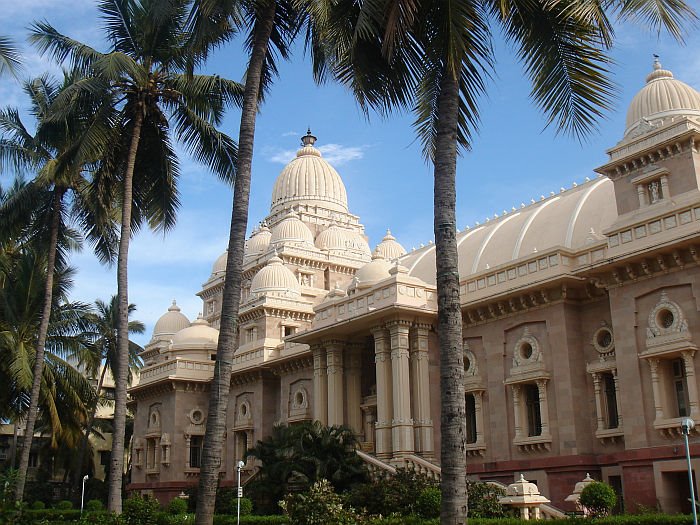
Indian music tradition holds that various ragas can produce not only various moods, but specific effects. I wonder whether there are specific ragas to produce VishwaShanti (world peace)?


There will commence today a 5 day Carnatic marathon of nonstop concerts with all the available major artists performing one hour segments AND A PRIZE WILL BE GIVEN TO THE RASIKA(fan)WHO LISTENS TO THE MOST SEQUENTIAL NUMBER OF CONCERT HOURS!!!!!!!!!! I wonder if he gets a ghee soaked kiss from Jayalalitha?
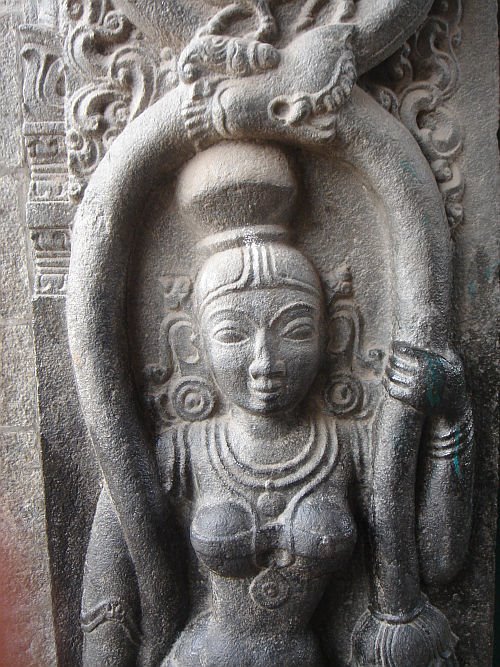
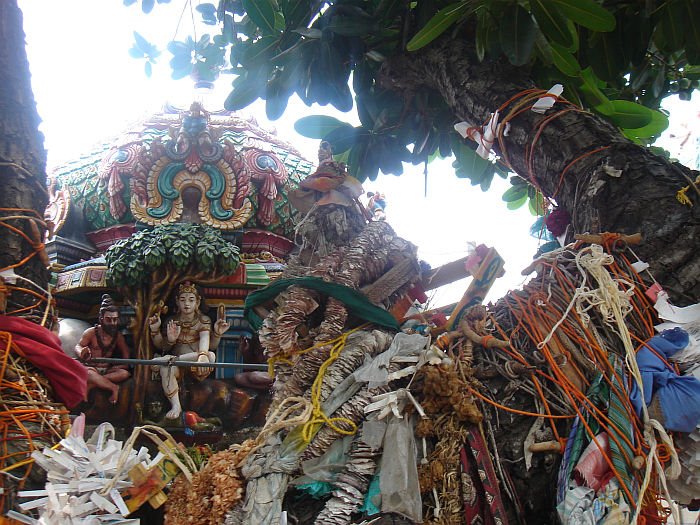
G. wrote a few days later to elaborate:

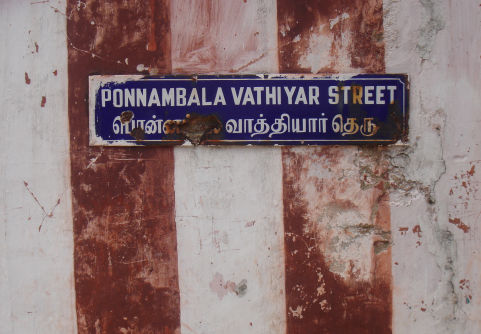
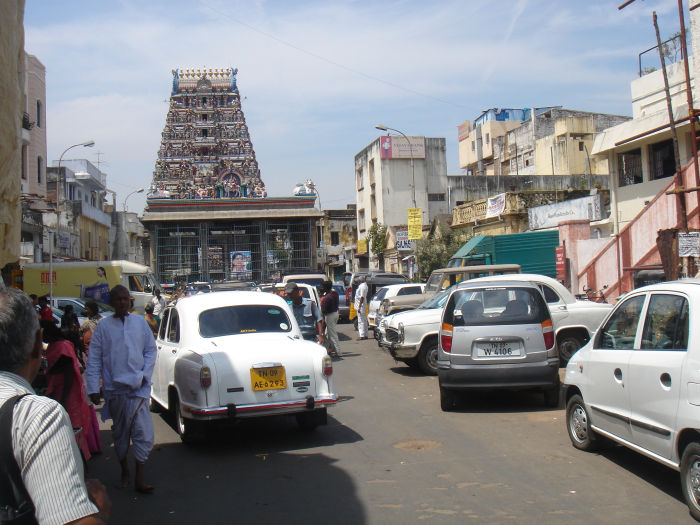
I am attending a few hours of the 100-hour marathon of Carnatic music for world peace. It is in a small temple in Mylapore. NO one knew where it was exactly, so I hopped a bus on Peters Rd which took me to Royapettah/Mylapore crossing and walked from there. All the living big shots were there, each artist playing for one hour. Good stuff.
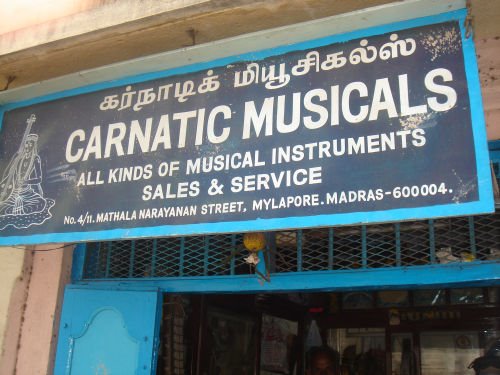
Oh man, I know that crossing. Royapettah/Mylapore. I can taste the ghee poli now.


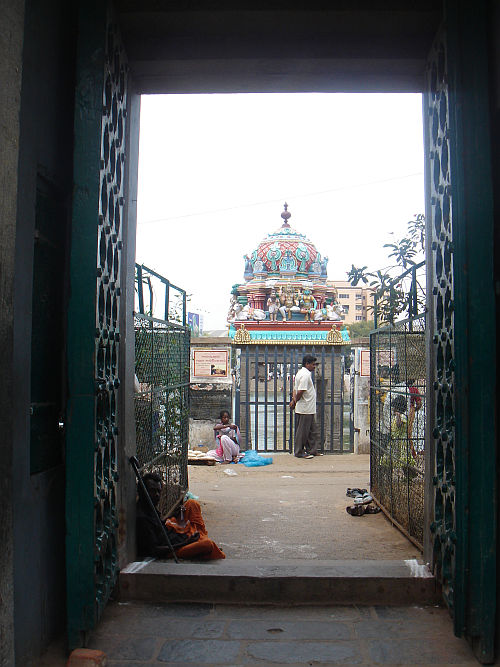
Mylapore is The Hood for Carnatic traditionalists. If you go, don't neglect to visit Karpagambal Mess on East Mada Street (I think), and get your card read by the Kili Jyotisham (man with a trained parrot who selects a card for fortune telling) in front of Kapaleeshwar Temple.

(My card was Saraswati. Don't ask me what Jesus is doing on the signboard....the cards were mostly Hindu deities.)
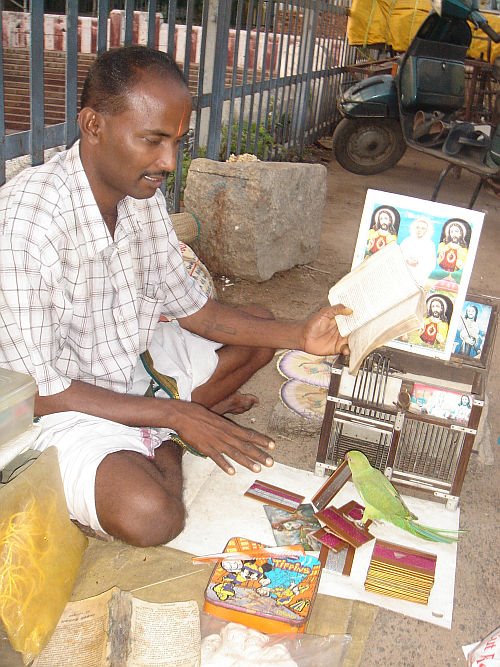
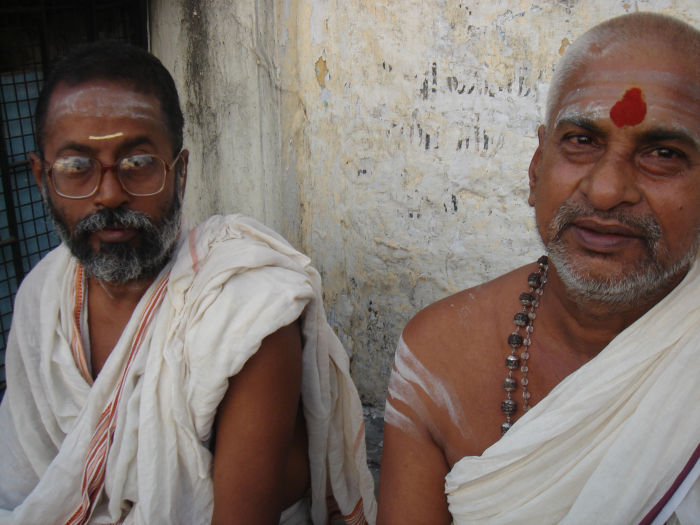
Mylapore is one of the last 'hoods for ultra-traditional South Indian Brahmins (above). While watching them tirelessly prepare for pujas on the ramparts of Kapaleeshwar Temple - bundling durva grass and reading Tamil astrological almanacs for the right tithis -- I always reflect that the men I'm watching may be the last of their kind. Will India's Generation Next find time to do duty for the gods, and do they even know how to wrap a dhoti or vaishti?

G. continues updating me on some old haunts:
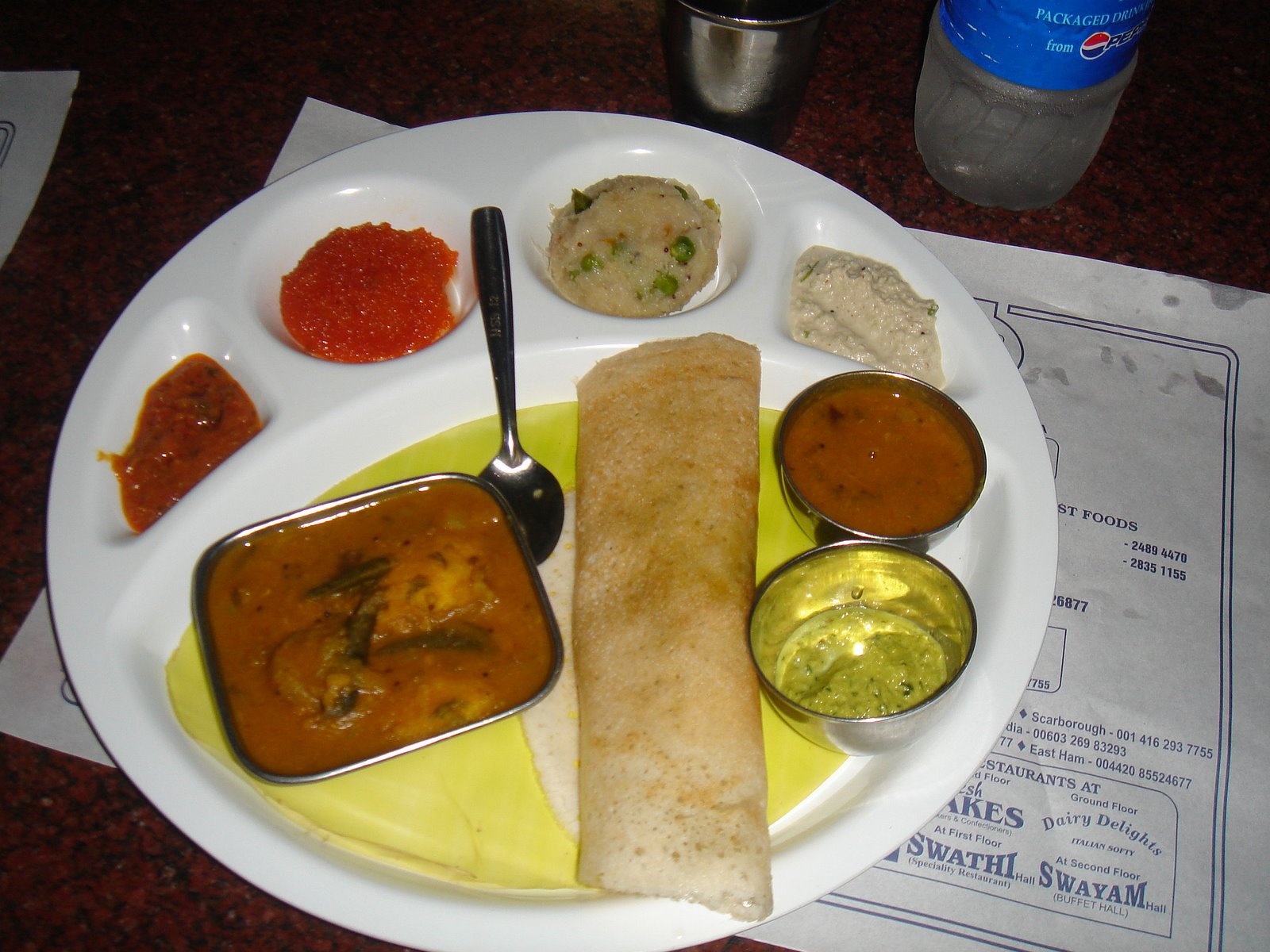
I am sure you remember the old Maharaja restaurant in Triplicane. It is under new ownership and called the Suriya. It has been cleaned up, new chairs and staff. The food is good but the service is terrible. It seems they cannot find good staff. What they need is a waiter boss who can shout orders and make them scurry around. They are sleepwalkers now. A good meals hotel has to be in frantic action like Ananda Bhavan, where they slap on the sambar before you run out. Suriya does have a bit of style--the coffee comes with the proper foam on top and the added touch of a crisscross of coffee powder on the foam gives some points.
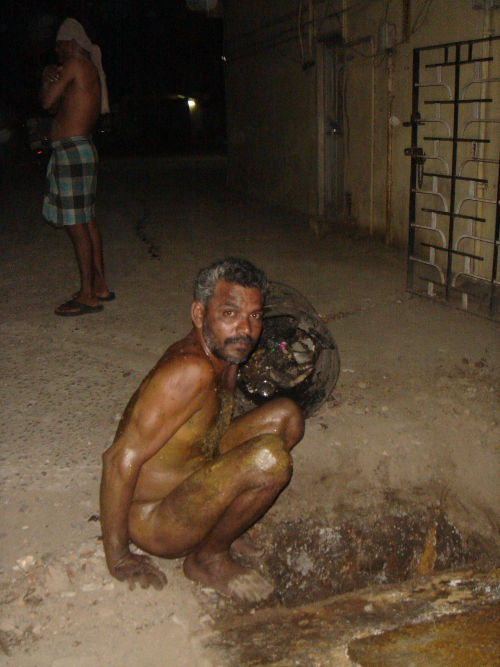
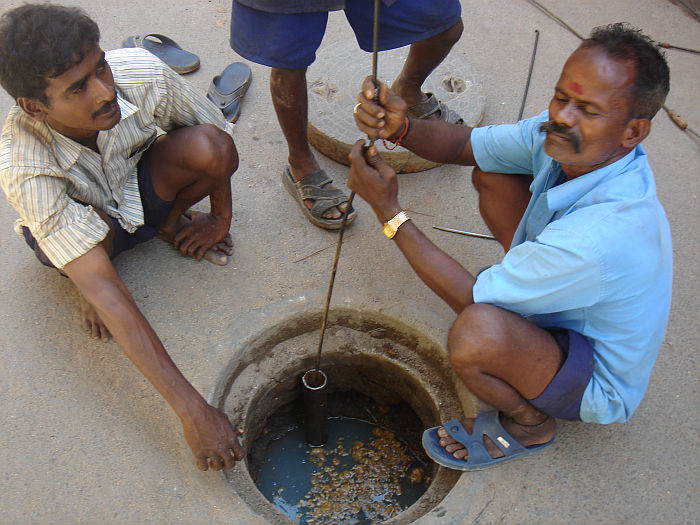
Then G. describes a less appetizing reality of Indian urban life. I witnessed this in Chennai couple years ago in 2006. If you are eating you should probably stop reading and looking now....

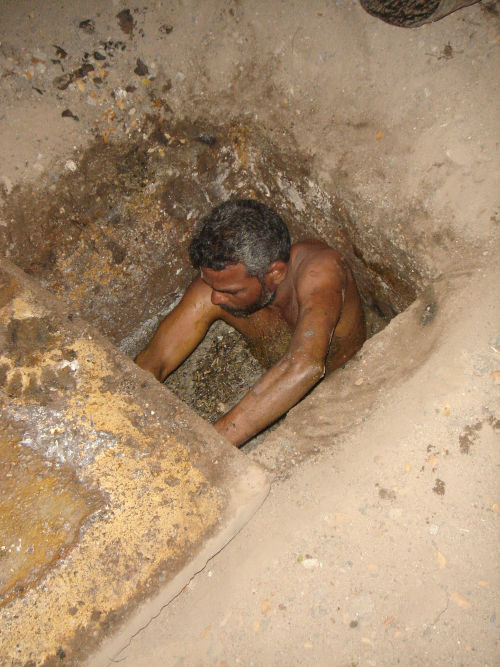
They are cleaning the sewers here so small black men descend into fetid pits of black goo and bucket them out on the sidewalk. Now there are huge piles of black stuff for several blocks. I can now hold my breath at least 3 minutes.

That's right - tiny Dravidian men practically dive into the reeking pits, totally naked save for a tiny loincloth strip. No protective gloves or mask, no disinfectant provided, nothing, and come out dripping in green-brown slime. My photos from 2006 are below.

In 2006 I was on my way to a "nice" restaurant when I saw these scenes just outside. I couldn't eat after going in, so I described it to a man working there. "Oh, the municipality gives them gloves and protective wear," he said, "but they sell it and keep the money." I'll decline to comment on that.
Sunday, January 20, 2008

Meals ready

Families , friends and food
Paharganj, Delhi

Since I am trapped here for a few days, thanks to the dilatory FRRO, I finally found the good food place.

I may have mentioned that Paharganj is the primary budget traveller's area in Delhi. This area is positively flooded with foreign tourists of all kinds, genuine neighborhood locals, and then the touts and insufferable rickshaw sharks that are only there to cheat the foreigners. It is good for certain things: cheap accomodation, meeting other foreigners, good internet with updated equipment, buying and selling used books, decent food (Indian, 'foreign' and Nepali), having a beer in a reputable rooftop bar. (Most Indian budget bars are not places a woman can go at all, let alone as a single person. )

There is a road near P-Ganj called Arakasham Road (aka "Ram Nagar") which features some more expensive, usually better quality, rooms in a less frantic, more "family" oriented atmosphere. There is scarce internet here and all the keyboards stick like hell. That's where I am now. It's mostly Indian families and some foreign tourists, who mostly flock to the upmarket Ajanta Hotel. (At $30 a night, I can't afford to stay there. I can only afford to have breakfast there.)

I like this particular hotel (Arya Tourist Lodge) for its "family" type qualities.

In India, "family" (as in "family restaurant") means "women friendly, not too sleazy." For one thing, some of the cheaper hotels (ie, in my budget range) rent rooms to gangs of young men who are looking for a place to party, drink, watch Hindi movies very loudly, smoke like chimneys and make noise all night long. "Family" hotels avoid renting to these guys.

For another, there is a woman working behind the desk here. A genuine auntie, with henna-orange hair, gold nose pin, Punjabi suit and a big smile. This adds to the wholesome environment. So do the Nepali room boys with their customary Nepali sweet shyness.

The owner, Mr Arya, is an old-school Brahmin whose dad started the operation. Dad's portrait hangs over the desk, garlanded with plastic flowers in memorial, keeping a watchful eye. In his office Mr Arya keeps his own watchful eye via closed-circuit cam on the front desk.

Occasionally he has to come to the rescue of the 2 desk managers, who don't speak so much English. He emerges seemingly at random from the sanctuary of his office to intervene when there is a misunderstanding. At first I just thought it was synchronicity. Then I saw the closed-circuit cams on his office computer screen.

Multani Dhanda
Anyway, after a few days of "Corn Flex Hot Milk" and "Banana Pange" from room service I finally found the good food place.

If you continue up Arakasham Road, you get more and more rickshaws annoying you and touts hissing "Yessss?" There is a vague smell of urine and cigarette smoke. The hotels get older and more run-down, and there are fewer foreigners.

Finally you turn the corner and are in a different world.

This road is called Multani Dhanda. Now, you are in a real Indian Neighborhood. You smell it immediately. Instead of urine, it smells like spices, cooking food and incense. Real people live here, not just fly-by-night drifters.

Unlike much of Arakasham Road, here there are women - of all ages. School girls hand in hand on their way home, grandmothers also hand in hand waddling from samosa stand to general store with their canes and saris, aunties running corner shops, young mothers with their kids.

The shops sell - rather than bus tours to Manali, soda pop and internet - the items required to sustain a normal Indian life. Dry fruits, gents' tailoring, Ayurvedic medicine (increasingly infiltrated by allopathic and international brand names), watch repair, mobile phone repair, dairy sweets and lassi, stationery, giant open sacks of corn flour and sesame seeds.

It's easy to make friends with local shopkeepers - there are very few foreigners here. The guy who runs the tailor shop won me over immediately as he was feeding a bunch of stray dogs. He bought chappati from the shop next door and milk packets, and the dogs actually took turns eating from a steel dish. "My best friends!" he said proudly, putting his hand over his heart and bowing. He looked for all the world like the Indian Airlines "maharajah" icon.

It was here that I found Grand Madras Hotel.


How to find good food -- for beginners

If you go to look for the Grand Madras, or a place like it, don't let the name mislead you. It is neither grand nor a proper "hotel." It is a tiny open-front shop that can seat all of 15 people, even by Indian seating arrangements. But it has all the signs I look for in good local food.

First of all, I look for a clean place (clean by the standards of someone living in India for 5 years. This means, you have to learn to distinguish between clean dirt and dirty dirt. Maybe that should be another post).

You want it to smell like food - not grease and sweat and stale air. For myself, as a pure vegetarian, I just look for south Indian. Yes, I am biased!

"Pure veg" as it's usually called means no eggs, meat, chicken or fish are used anywhere in the restaurant. I'm not sure, but I think this also used to be called "Brahmin meals." (You can still see places advertising 'Brahmin meals' in Kerala for example. I think that means it is actually cooked by a Brahmin man. Part of the Brahmin orthodoxy, found only in a few enclaves today, meant that an observant Brahmin must eat only food cooked by another Brahmin.)

"Vegetarian" (not 'pure veg') places can include eggs, but not chicken or fish.

All Indian veg-pure veg places also serve dairy products such as yogurt, milk and cheese. The concept of veganism is nearly unheard of in India. I love yogurt too much to ever be a vegan.

"Jain meals" or "Jain items available" means they are cooked with no onions or particular spices, which are prohibited by Jain custom. Saravana Bhavan advertises "Jain Sambhar Available" (sambhar is a spicy gravy). Since Jains are primarily an urban bunch, you don't see this much outside major cities and the Jain pilgrim circuit (I saw it also in Bihar near Jain historic sites).

And finally, "Non-Veg" means they serve eggs, fish, chicken and meat, with the exception of Beef, which is hard to find in India outside of star hotels. I saw one food place yesterday that openly advertised "Non Veg - No Beef Used Here." (they spelled it "Beaf")

Within non-veg, "Halal" is a particular type of preparation required by orthodox Muslims. It involves meat slaughtered in a certain way conforming to their rules, which I think involve the animal's welfare. Someone told me it means the animals should feel minimal pain upon slaughter. Maybe a reader out there can add something to this. Halal places are meat-places, heavy on the mutton, very often decked out in Islamic green colours and there is little for me to eat there.

There is far less possibility for contamination with vegetarian food than with meat, particularly in a humid environment (we are not in Ladakh anymore).

Vegetarian joints are also far less likely to allow smoking inside.


The Gods of Good Food
Signs of south Indian food: - South Indian names (names referring to south Indian gods like "Om Murugan," "Shri Balaji," anything with "Madras", or rather long names like "Saravana Bhavan". South Indian names frequently have lots of double letters in English).

-Pictures of south Indian gods. Ayyappan (always shown squatting with an "Okay" mudra), Murugan (youth carrying a spear, accompanied by a peacock) and Sri Venkateshwara - the one who looks like a space alien with a big Vee over his eyes.

(Before someone writes in saying "It's not a big vee, it's a blah blah blah and his eyes are covered because his gaze will incinerate the world, and he is not a space alien..." I know all these things, I am just trying to break it down for newcomers. Kausalya supraja rama purva sandhya pravartate and all that.)

-Guys wearing
lungis (the south Indian traditional men's dress, like a sarong).

-
Signs in the "squiggly" scripts of South India - Telugu, Malayalam, Tamil, Kannada. The letters don't look like ordinary North Indian script.

-And of course, it is a completely different cuisine, with rice-based dishes called
idly, dosa, masala dosa, uttappam, pongal, South Indian veg thali.

I also look for a place with some "transparency" (are they cooking out in the open? or down in some smelly basement with bad drainage?). A high turnover is a good sign of freshly made food.

Grand Madras Hotel is a good find. First of all, I can get idlys at any time (traditionally they are a morning dish only). Their Veg Thali is only 45Rs with refills. And, they have the delicious brewed South Indian coffee ("Madras coffee" to distinguish it from instant Nescafe).

Lassi lassie
Different regions have their specialities, and in an Indian metropolis you can sample them all in the same block. South India has its rice-based delicacies, but Punjabis make my favourite lassi (yogurt shake). On the opposite corner is the Amritsari Dhaba. A proper Punjabi lassi is verrrry thick and rich, with real rose water added and a big thick blob of yogurt- fat in the middle. (Rose flavouring, which is a bit like old ladies' perfume, is fairly common in Indian sweets - something unheard of in the west.) For 15Rs I get a big steel tumbler of gulab (rose) special lassi.

Now I'm hungry. You know where to find me!