- Steve Martin
White people just can't catch a break. If you stick with Strauss and the Civil War, you're a closed-minded ethnocentrist. However, if you express interest in some other culture, you're some kind of orientalist. I guess we should all just stay home and read De Bible, maybe join Daughters of the American Revolution.
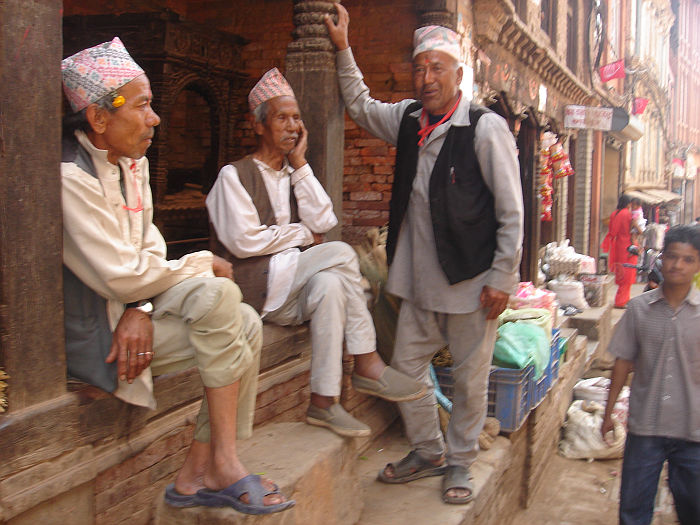
I went out to Bhaktapur to exploit the natives this week. Here are some photos. Thank god I'll probably never make any money from them...then I'd be a neo colonialist.
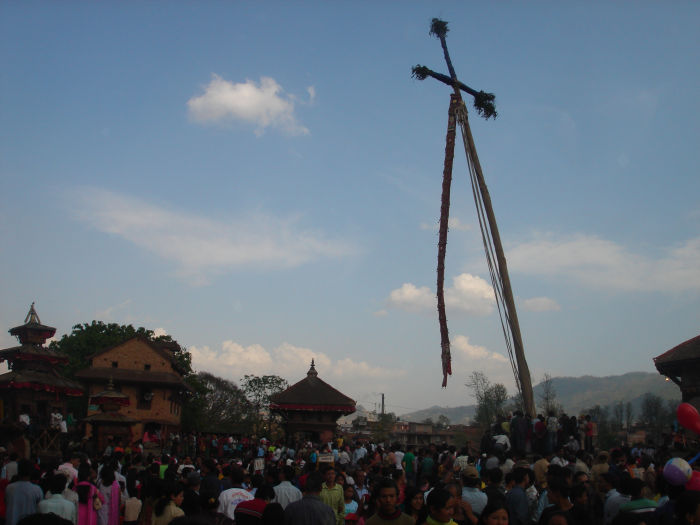 ::Bisket Jatra is a nine-day blowout festival in Bhaktapur, the second Every day features a different event. This is the raising of the Lingo (Lingam), a sort of Maypole equivalent (fertility/phallic symbol). When the Jesuits arrived centuries ago in their attempts to convert the Newars, they were so happy to see the lingo - they thought Christianity had already come to Nepal. Boy were they wrong....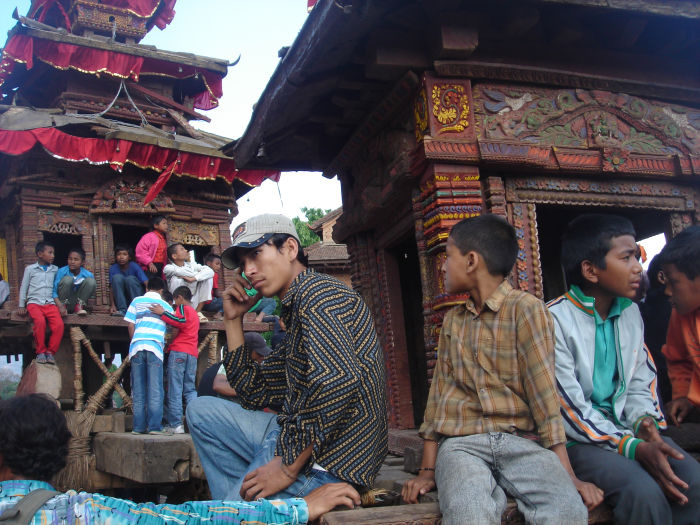
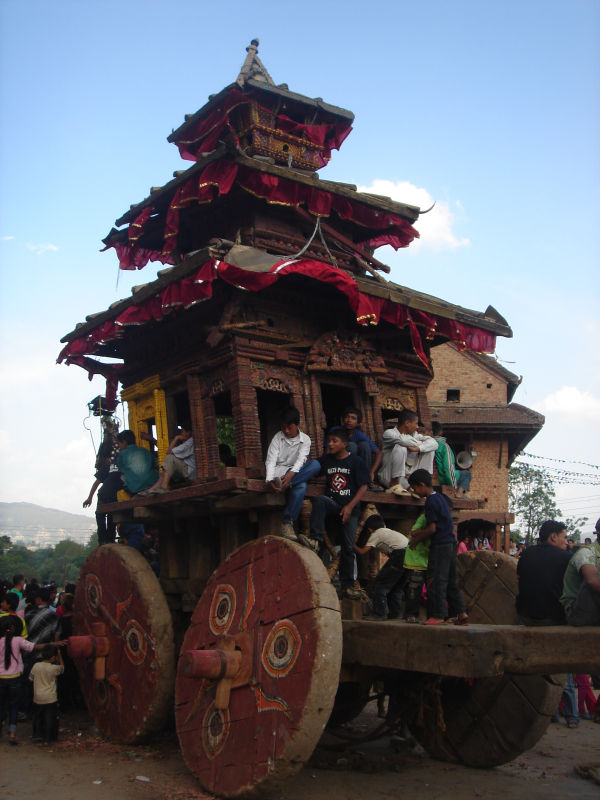
::One of the focal points of Bisket is the tug-of-war chariot pull between lower Bhaktapur and upper Bhaktapur. This ancient chariot gets nearly pulled apart like a rag doll. I've seen at least a dozen Hindu chariot pulls and I've never seen anything like Thursday night's chariot wars.
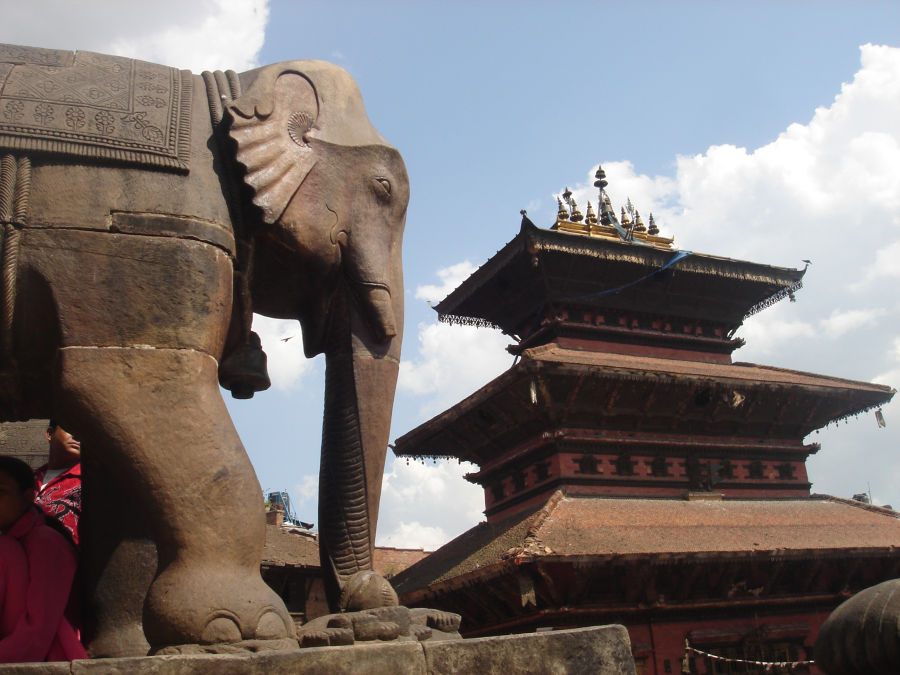
::One of the guardian elephants (nearly life-sized) on the steps of Nyatapola Temple, overlooking the Bhairab Mandir in Taumudhi Square.
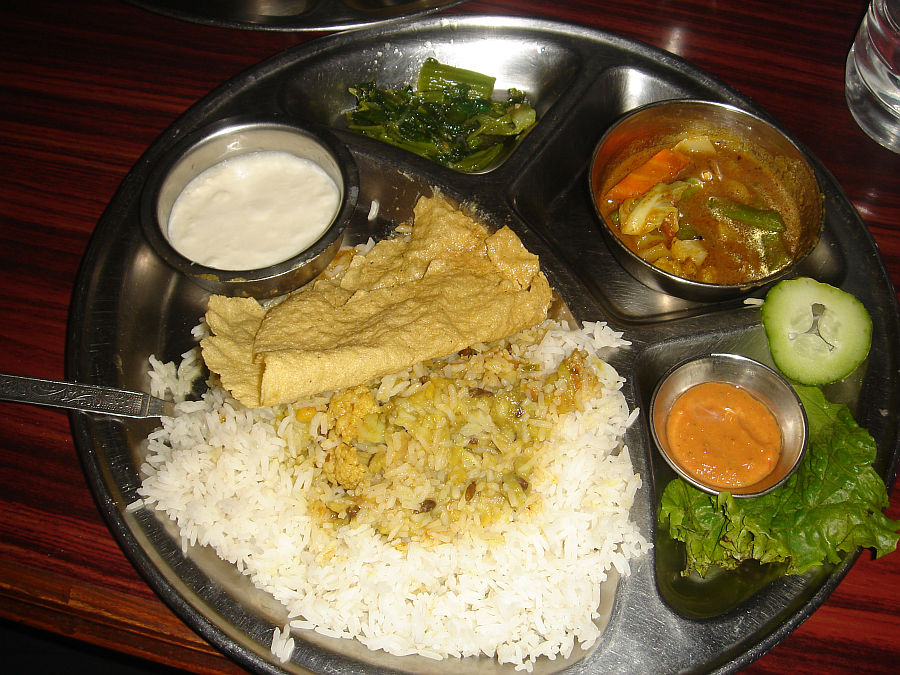 ::Yummy daal bhatt - the Nepali national dish - at the Newa Family Restaurant in Sukul Dhoka - highly recommended. All this for 110NRS (about $1.50).
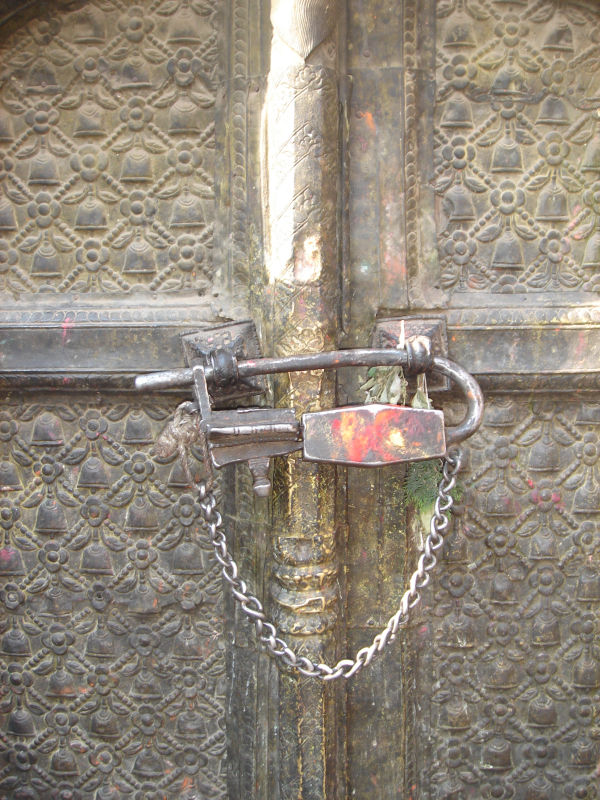 ::The elaborate medieval style lock on a temple door.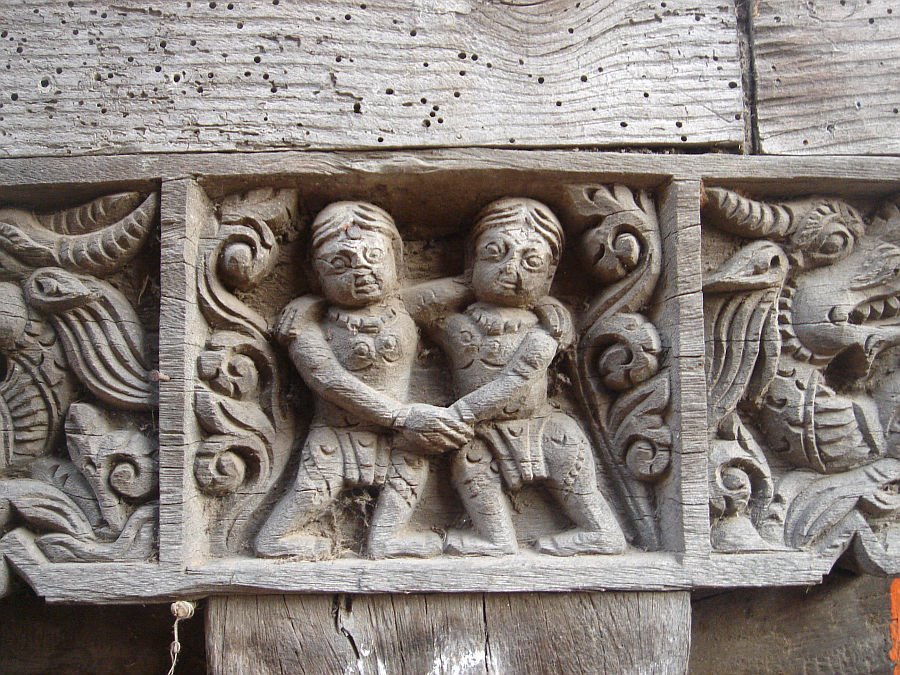
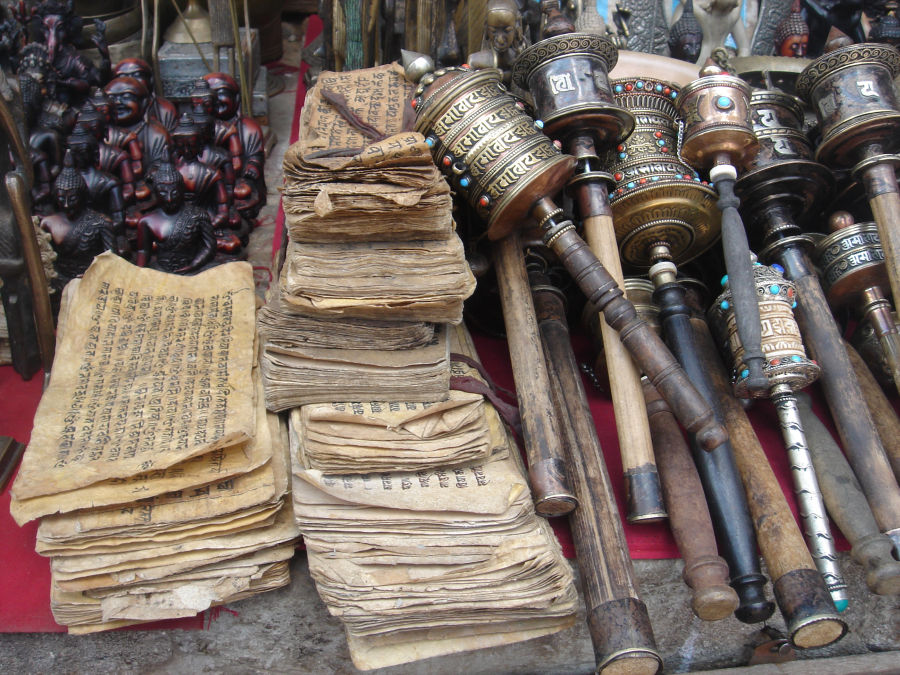 ::The Newars created their own brilliant art, wood carvings (above), metal work and Paubha religious paintings. However, most of what sells in places like Kathmandu, Boudha and Bhaktapur is Tibetan, or should I say "Tibetan." All this is junk created by Nepalis and sold by Nepalis. The real Tibetans are all in hiding from the police these days.
 A real Tibetan, for instance, would probably never leave a sutra lying out uncovered as seen above...or sell it for a souvenir. Tibetan script itself is considered sacred, not to mention religious writings.
I went to visit a Thangka shop (Thangkas are Tibetan traditional religious paintings) called "Refugee Camp Thangka Painting School."
"Where are the refugees?" I asked. Of course, there were none. All the paintings are done by Tamangs, also Himalayan Buddhists, who learned the art from Tibetans after the 1959 exile.
I asked where all the Tibetans were. One painter guy told me "they're all staying in their rooms these days...they are scared of the police." It didn't seem to bother him at all that his own painting master was being persecuted and driven into hiding.
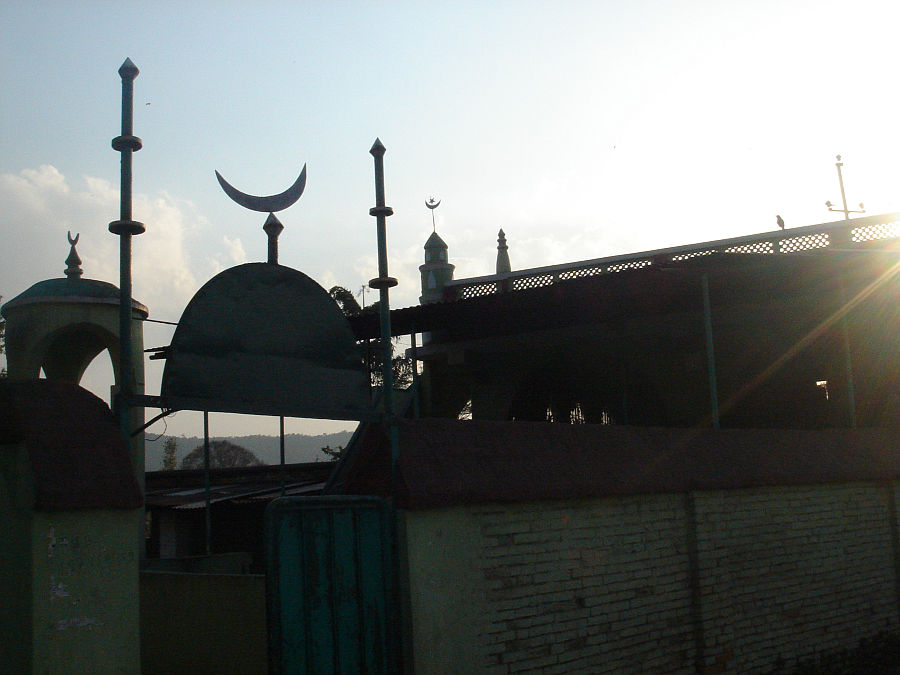 ::Despite its image as an overwhelmingly Hindu traditional town, Bhaktapur also has at least one mosque and many Buddhist viharas, including one Theravada Buddhist vihara supported by a Thai donor.


 Posts
Posts