skip to main |
skip to sidebar
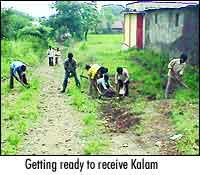
 VAITAGWADI (IGATPURI, Maharashtra), OCTOBER 4: They hate the name of their village. In a quiet corner of the picturesque Igatpuri tehsil, barely 30 km from bustling Nashik, 57 families of tribal village Vaitagwadi want a new address: for vaitag literally translates into
  ‘‘irritant’’ and vaitagwadi, ‘‘irritating village’’.
Tired of being the butt of jokes, the residents now want the village to be called Dr Abdul Kalam Nagar in the honour of the President, who will be visiting them on October 15 as part of his tour to inspect the wadi (orchard) project in the region.‘‘I don’t know how our village got this name,’’ says a frustrated Dashrath Bendukale. ‘‘Everywhere we go, people ridicule us, saying the irritants have arrived. Unless we change the name to something positive, our problems will not go away’’. For now, this is at the top of the residents’ agenda, even though the area is plagued with water problems and have no roads. (siren comment: Sounds like the name is well warranted.) This is the second attempt to rename the village. ‘‘Five years ago, we wanted to call ourselves Gokulnagar,’’ says Balkisan Darane. Source: Indian Express
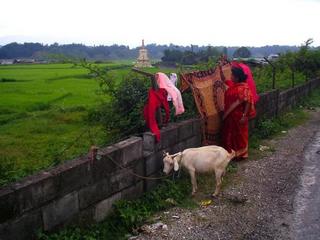
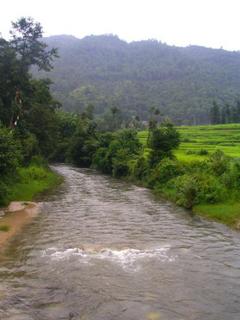 Nowadays you can fly from India, or anywhere, to Nepal, of course. That would save pain in your backside, and enable you to see the Himalayas from the air - during the dry season only. In monsoon they're not visible (June-October or so). However, you will then miss the rides through thrilling border towns like Gorakhpur, Senauli, Butwal and Beheliya, a whistle stop through Lumbini, the birthplace of Lord Buddha, not to mention umpteen (about 12) road blocks by the Royal Nepalese Army looking sharp in their blue camo and AKs. You do get a beautiful, if long, bus ride through the lower Terai and shimmering green terraced rice fields. Most tourists don't go to this part of Nepal. It was cool to be vaulted from the dry, dusty drab Senauli border almost directly into the emerald plains then up, up into the misty hills, and to see the "real" Nepal prior to arrival in the big city.An added attraction was the fresh rubble from recent landslides blocking the roads. This is a very real danger during rainy season. The meandering highway followed the steep Rapti river gorge for at least five hours, sheer hillsides with a violent grey ribbon of river below, swollen by the seasonal rains. I came by train from India to Gorakhpur, UP, spent one night there at the Ellora Hotel (150rs, very clean up top), and caught the 4am bus to Senauli. From Senauli I was hauled by a 15 year old on a cycle rickshaw to the Indian border post, where they wearily stamp your exit. I then continued on the cycle rick across the border to Beheliya - now Nepal - where the considerably cheerier Nepali border people take your $30, photo and stamp you IN for 60 days. Change your money nearby.
  DON'T bring in any Indian 500Rs notes, they are banned right now in Nepal. 100s are fine but no 500s or 1000Rs. I didn't believe them and later had a really hard time changing the Indian 500s for Nepali. You have to find an Indian person (try hotel proprietors) and keep it top secret.By this time one of a dozen touts will have approached you for the mini-bus ride into Kathmandu, which leaves either right there by the border, or a short taxi ride away. I paid about 250Indian Rs for the 9-hour ride - no extra charge for the serangi-playing urchins who climbed aboard to serenade us, or the old ladies in head wraps carrying baskets of turnips, or the 10 year old hawker with his backward baseball cap that careens out the open door and yells at every stop, "Ho Kamadoo Kamadoo! Ho Kamadoo Kamadoo!" Midway to "Kamadoo" another tout will have approached you offering a room. Don't worry, they are not nearly as pushy as the Indian touts. You can arrive in Kathmandu with a hotel and even a prearranged ride from the bus station (they cel phone ahead). Don't eat any food on the road that is not from a sealed pack, ever. Even if you're starving, which you will be after nine hours of potato chips. I got giardia this way.
 Calling All India Virgins!
Lonely Planet has a message board full of hilarious questions from India first-timers. Some examples: "Can I get a Starbucks Chai Latte in India?" and "Would it be safe to be seen reading a Salman Rushdie Satanic Verses book on an Indian train?" It's tempting to write back and say "Yes, if you are seen reading or even known to own a copy of Salman Rushdie, any Muslim within eyeshot will slit your throat instantly."
But seriously: every year thousands of India first-timers, most of them college age, head off on the Great Journey. Most of them have visions of either a mystical incense-laden land, or a seething horde of scheming humanity. The reality, of course, lies somewhere in between. As an India veteran (also a Manhattan veteran; I specialize in living in improbable places), I would tell them:
1-READ UP before you go. Particularly good is Culture Shock: India, the Lonely Planet current guide, and Lonely Planet's guide to health in Asia. Personally, I read everything I could get my hands on: travelogues, history, culture and customs. It will add dimension to your travels, explain many strange things you'll see, and enable you to better understand people you meet along the way.
1a. One does go to India for history, exotica and culture, but India is really all about the people. Believe me, there's no avoiding them, so brush up on your small talk!
2-FORGET your romantic notions of spiritual India. It is the most materialistic place on earth, in some ways for good reason (see below). Also the most interesting. After India, everywhere else in Asia, and perhaps the world outside of Bagdhad, will be a piece of cake. See #8 and #6.
3-DON'T BE SCARED. Don't do dumb s***, like flash lots of money, but don't be scared. India is madcap, energetic, and endlessly amusing.
4-LEARN some of the local language. Even your mistakes will thrill the people to no end and if nothing else, it will show them you're not the average stupid tourist.
5-WEAR traditional clothes, especially for girls. This means, in most cases, a Punjabi suit (aka salwar-kameez or churidar, the long baggy pyjama pants, long tunic top and accompanying scarf draped over the chest). I cannot stress this enough. Ladies, do not wear your hair down, especially blondes. Loose hair is a sign of a loose woman in many places, and if you are a foreign woman, you are doubly suspect and are, in local custom, asking for harassment. (unless you're in Mumbai, then no one cares.)
5a. If you want to get along with local people and be treated with any kind of respect, don't dress like a hippy. Indians have vivid memories of the first big wave of 60s and 70s tourists, and few of them (the memories) are positive. Also, any time you have to deal with any person in an office, or law enforcement, it pays to clean up.
6. A word about bargaining/haggling: Most Asians have barganing down to an art form. It is in their blood, particularly trader groups like Kashmiris. It is an art form you will never master, but must become decent at in order to have any money left by the end of your trip. Remember, bargaining is just the normal way here - they do it with locals as well. The difference is, locals know the game. Learn the game and see it as a game. DO NOT feel guilty about not paying 'enough.' Believe me, they will never let you get away without their having made some profit. Since you don't know the rates, you don't realize this. When a driver suggests 200Rs for an 80Rs ride, he is not trying to be a bastard - he's just negotiating. He is doing his job. It is your job to counter with half or less of the original amount. He expects this and is not offended by it! From his point of view, he may not get such a good fare the rest of the day. If he can make a day's wages in one go, why not? There is little social mobility and few chances for "getting ahead" in India's rigid, slowly changing social structure. The only way around it sometimes is to "cheat," or as they would say, be "smart." Fair play has never gotten the average Indian very far, so they often resort to these things. Don't get righteous, just hold your ground and keep smiling.
7-DO NOT get involved in drugs, or hang around people who do. Period. This is one good way to get in trouble, fast.
8-Keep a sense of humour, and do not lose your cool. You will NOT always succeed in this....but keep it as your goal.
9-Remember that to many, not all, of these folks, you are a walking bank. If you keep this in mind *without resentment* and regardless of the exchange taking place, regardless of how 'nice' anyone is, you will fare MUCH better in India. Just accept it and go on. Get used to it and don't let it get to you. Eventually, you will get past these people and meet some nice folks.
10-Do not display affection openly with your boy/girlfriend. Don't even hold hands. This is considered a slap in the face outside of Goa or Mumbai.
11. Don't bother asking for food with 'no spice.' they don't know how to cook this way. It works better to say NO GREEN CHILI. The green chilis are the really hot fiery things.
12. Any time money changes hands, REGARDLESS of who it's with - your nice old auntie innkeeper, anybody - it is time to be alert. Get a receipt for everything, absolutely everything. If you buy a museum ticket, be ready to show it at any time - they love to get official about paperwork.
13. Regardless of what your hippy friends say, do not "go native" and start cleaning yourself after the toilet with your hand. Most digestive diseases are transmitted fecal-to-oral. The fact that local custom does not understand this, plus the scarcity of water and soap in many places, accounts for the fact that 1000s of people still die of simple diarrhea every year here and in Nepal. This means that unless you have access, EVERY time, to good running (preferably hot) water, plenty of soap, and a clean towel, you will infect yourself. Needless to say, all these things are pretty scarce outside of star hotels. BYOTP (bring your own toilet paper) and mini bar of soap.
Questions? Hate mail? Don't forget to write, and include your email! Most of all, have a great time. It's a great country and I am proud to now call it home, even if they still call me 'a foreigner.'
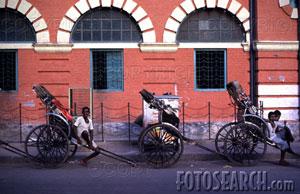 Letter to the CALCUTTA TELEGRAPH
30 September, 2005
Sir -The decision to ban handpulled rickshaws is a hasty and ill-advised one. Removal of such vehicles alone will notmake the city a nouveau-techno hub, as is the stated goal of the CM. Foreign investors don't shy away from Kolkata because of a few rickshaws; they disdain it because of poor infrastructure, gagging pollution and a history of unruly labour relations. Has anyone thought beyond their image-conscious modernization campaigns to ask the pullers themselves how they feel? They don't want to give up their livelihood and don't wish to exchange their carts for a noisy, polluting auto that will only add to the traffic and smog. What about their feelings? They are the ones to be most immediately affected. The government claims to be protecting them while ignoring the protests of the pullers, who don't want this type of 'protection.' Instead of decrying the inhuman conditions and getting rid of it all together, why not organize and standardize the business, as they did railway porters? Why not unionize them and guarantee them certain standards of treatment and fair minimum rates for the very real service they provide? It's been done with virtually all other professions, with a fair degree of success, and would empower the pullers. A common reformer argument is that the rickshaw pullers are abused and in ill health. Some of the same NGOs and liberals who want to do away with them, I will warrant, are the same folks who are all for organizing, unionizing and empowering female sex workers. These are laudable efforts, so ask yourself: Why is it more acceptable, to these activists, for a woman to sell her body and services in a dangerous and unhealthy profession than for a man to do honest traditional work pulling a load? In organizing sex workers, activists educate them about health issues and make sure they have access to needed remedies and preventatives. They also inform them of their rights. Why can't we do the same for the rickshaw men?Another common objection is that there is something innately inhumane about one human toting another, regardless of conditions or weight. Here in Nepal, porters are regularly seen carrying on their bent backs things easily 3 times their own weight. One man will port a fullsized refrigerator using only his headstraps and back. It is their living and they are glad to do it, and in this terrain with so few vehicles, there are scarce alternatives. Why is it less humane for a man to pull a human in a cart, standing upright, than for these gents, or for railway porters, to carry such (inanimate) loads? I love Kolkata and spent 5 weeks there. During that time I used the invaluable services of the pullers several times, especially in monsoon. I think they provide a honourable service and should be treated that way - not done away with as though they are a disgrace. Kolkata should become a more modern city, but not at the expense of the least of its citizens, nor of its traditions. Regulate and empower the pullers, and let one of the city's unique features remain, and all the better for it.C. M.Kathmandu, Nepal
 VAITAGWADI (IGATPURI, Maharashtra), OCTOBER 4: They hate the name of their village. In a quiet corner of the picturesque Igatpuri tehsil, barely 30 km from bustling Nashik, 57 families of tribal village Vaitagwadi want a new address: for vaitag literally translates into
  ‘‘irritant’’ and vaitagwadi, ‘‘irritating village’’.






 Posts
Posts