Friday, September 30, 2005

Don't Pull the Hand-Pulled Rickshaws

Letter to the CALCUTTA TELEGRAPH
30 September, 2005

Sir -
The decision to ban handpulled rickshaws is a hasty and ill-advised one. Removal of such vehicles alone will notmake the city a nouveau-techno hub, as is the stated goal of the CM. Foreign investors don't shy away from Kolkata because of a few rickshaws; they disdain it because of poor infrastructure, gagging pollution and a history of unruly labour relations.

Has anyone thought beyond their image-conscious modernization campaigns to ask the pullers themselves how they feel? They don't want to give up their livelihood and don't wish to exchange their carts for a noisy, polluting auto that will only add to the traffic and smog. What about their feelings? They are the ones to be most immediately affected. The government claims to be protecting them while ignoring the protests of the pullers, who don't want this type of 'protection.'

Instead of decrying the inhuman conditions and getting rid of it all together, why not organize and standardize the business, as they did railway porters? Why not unionize them and guarantee them certain standards of treatment and fair minimum rates for the very real service they provide? It's been done with virtually all other professions, with a fair degree of success, and would empower the pullers.

A common reformer argument is that the rickshaw pullers are abused and in ill health. Some of the same NGOs and liberals who want to do away with them, I will warrant, are the same folks who are all for organizing, unionizing and empowering female sex workers. These are laudable efforts, so ask yourself: Why is it more acceptable, to these activists, for a woman to sell her body and services in a dangerous and unhealthy profession than for a man to do honest traditional work pulling a load? In organizing sex workers, activists educate them about health issues and make sure they have access to needed remedies and preventatives. They also inform them of their rights. Why can't we do the same for the rickshaw men?

Another common objection is that there is something innately inhumane about one human toting another, regardless of conditions or weight. Here in Nepal, porters are regularly seen carrying on their bent backs things easily 3 times their own weight. One man will port a fullsized refrigerator using only his headstraps and back. It is their living and they are glad to do it, and in this terrain with so few vehicles, there are scarce alternatives. Why is it less humane for a man to pull a human in a cart, standing upright, than for these gents, or for railway porters, to carry such (inanimate) loads?

I love Kolkata and spent 5 weeks there. During that time I used the invaluable services of the pullers several times, especially in monsoon. I think they provide a honourable service and should be treated that way - not done away with as though they are a disgrace.

Kolkata should become a more modern city, but not at the expense of the least of its citizens, nor of its traditions. Regulate and empower the pullers, and let one of the city's unique features remain, and all the better for it.

C. M.
Kathmandu, Nepal

Monday, September 26, 2005

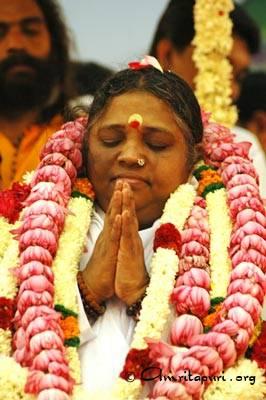
Meanwhile, in Kerala....Amritavarsham 52


Sunday, April 10, 2005

A Siren In Ceylon


Kandy - 10-Apr-05
Once I 1-got out of the city and 2-stopped expecting Sri Lanka to be India and appreciated it for what it is, the island began to open to me. Sri Lanka is not India, obviously (the food is a lot worse, for one thing), though there are lots of the cultural similarities, and some unfortunate standard features found in this area of the world(touts, overcharging, heat, air pollution, lack of information). However, some things are blessedly missing -

-like, crowds. Sri Lanka, even when crowded, like on a market day, is far less so than India. They don't seem tohave the population issues, (literally, using "issues" inthe Indian sense!) for whatever reason. This takes a lot of that Indian desperation out of the atmosphere. I read an interview last summer with a famous Indian cricket player who made the observation, "In India, we are a mob, with a mob mentality lurking just below the surface." There is a lot less tension in Sri Lanka in general.

-the gender thing. I can walk through a crowded market orbusy street in downtown Kandy wearing a t-shirt, no bra and baggy pants and not worry about being grabbed or groped. There is no need to swathe myself in fabric the same way women must in India. Also, on a bus I can sit between 3 or4 guys and relax - because they are NOT trying to use every bend in the road as an excuse to leaaaaaaann into me or talk to me ("you are from?") or anything. Because of this, the ladies themselves are more relaxed inboth dress and behavior. I think there are a lot more genuine smiles. My sources say that marriages are arranged here and it's very much like the Indian system, but something must be different. For one thing, at the Royal Palace Park in themiddle of town, every single bench (EVERY bench) was taken up by courting young couples. Not even one bench was just friends hanging out! That, you would not see in India. -In other words, it is more relaxed in general. Other than the touts/rickshaw hawkers, which are about like India, the general atmosphere is more that of a laid-back island.

-Sri Lankans ask fewer personal questions. -They - sorry, Indian defenders - are MORE POLITE. Whatever you want to call the trademark Indian attitude (proud, arrogant, haughty, officious), it's not there generally.

-Traffic is much more quiet and less insane. That is, drivers do not incessantly honk their horns, and they drive more slowly.

-The men do not usually wear the compulsory moustache. Afew older ones do. In fact, you can often spot Indians by looking for the moustache.

-There IS Sri Lankan pop music (Sinhalese), though itsounds like a sort of generic island-music you might call International Tropical Island Pop. Part calypso, part German oom-pahbassline (really), part bouncy African highlife, VERY bouncy, upbeat and mostly silly sounding. You would expect to hear these types of tunes in Trinidad, Mauritius, and soon, at least to my ears. Sinhalese pop music is best appreciated while riding (comfortably, not guardedly, seated between gents) on the back window seat of a public bus through tea-plantation hill country, passing banana stands, farmers, day laborers, Tamil Mariamman and Buddhist shrines amid garden-of-eden vegetation as you spiral downthe winding, bumpy road. As you breathe the cool upcountry breezes, the relentless bounciness of the music seems cheerful and fun, as it was meant to be...not obnoxious and frivolous as it feels while breathing in city exhaust fumes and sweating downtown.

They DO have fetish for very dated, schmaltzy US pop music, unfathomable...I mean, "Never Gonna Change my Love ForYou," "You Left Me, just when I needed you most," KennyRogers" Through the Years..." AGGGGH. Now THAT makes me homicidal. A Carnatic classical music program on the radio made me misty eyed.

There is even some good Sri Lankan food - but it's all adopted from Kerala. "Hoppers" and 'string hoppers' are actually appam and idiyappam. "Sambol" is a kind of better sambar and 'pittu' is puttu. Also, the fact that the economy is not so developed makes for some inconveniences, but it also leaves more gorgeous scenery untouched. The Tamil presence here is pretty strong; official figures say 20 percent but I think it may be more. In town, they run many 'hotels' (restaurants), shops, and many are rickshaw drivers. In the country they do the majority ofthe farm labor, in fact that's why they originally came here 100s of years ago, to work on Brit tea plantations. still, up in the Nillambe hills where the Buddhist center is, when you see any tea-planatation woman worker and say"Vannakam, eppady sugam?" to her immediately she will answer in Tamil. (The fact that I can't understand themmakes no difference. It brings a big smile to theirfaces.)

No, it's not India - there is nothing like India!


Tuesday, March 29, 2005

That 70's Country

Sri Lanka, Kandy - 28-Mar-05
Sorry if most of my complaints boil down to, simply, "This isn't India." India is home now....I could leave Sri Lanka tomorrow. I came to do my visa and now don't even think I want to do that here; plus the rumours are that you can get a better Indian visa (more time) in Bangkok. I think I'll give it a week, see if I can hook up with some of the many Brit/German tourists floating about and join their treks to Adam's Peak, Sigiriya, whatever. I am too freaked out to organize it on my own, and hanging with other foreigners will decrease my alienation.... I think.

The Koffee Pot is the state of the art cyber cafe here in Kandy, my new refuge/oasis/hangou. They are well AC'd, have 17 in ch monitors and serve drinks and pastries right to your computer table, which is pretty much my idea of, well, Ideal. This little hideout is keeping me relatively sane....

My friend Gary says, "Try to get something out of Sri Lanka, often good art emerges from misery."Here's hoping. The Temple of the Tooth is very nice, a sort of elegant austere haven, albeit a heavily guarded one, in the middle of this messy steamy town. Since a bombing here in the 90s, which killed 10 people, you must now pass three or four checkpoints....strangely half-hearted ones, where the guards lackadaiscally pass a metal-detecting wand over your abdomen (looking for IUDs maybe? ) and completely ignore your bag. The female guards seem to enjoy doing this, then playfully swatting me on the behind with the metal detector. (!)

So far the best words I have to describe SL all start with De - degenerate, depressed, a bit decadent, decrepit, dilapidated. As of yet I haven't even been really inspired to take photos, and THAT is really saying something for me. (something negative) Oh and don't forget Drab (de-rab). Trying to articulate what's missing in Sri Lanka - there is definitely less emphasis on aesthetics. In India, every billboard and store display and rickshaw seems to be burbling with irrespressible frippery, animation and colour. India has more creativity and energy. Even the beggars are more creative in India. The prevalence here of 1-polyester, 2- denim skirts (yes, long, full length skirts made of jeans, haven't seen one since high school) 3-old 70s cars, like the Contessas which look like mini versions of the Starsky and Hutch car; I would not be surprised to see a Gremlin, and 4- bad western pop music --you know, that quasi-reggaefied-pop cross between Boney M and UB40 that I call "international pop" --- all conspire to give a kind of run-down 70s feeling to the place (no, not a cool, retro 70s feeling...more like, everything that didn't sell from every Dollar General Store in the 70s got dumped here and is still filling the store shelves). The Sunday paper carried a full page pinup photo of Bryan Adams, who, for some reason, is a GOD both here and in India! "Summer of 69" is inescapable....

Nothing here looks like it should work....though surprisingly it often does. I was shocked to find a digital photo place that stays open till 10 at night. This morning the Tamil family who keep the bungalow where I'm staying were watching a TV show of Tamil film classics (incl. Shivaji Ganeshan, MGR etc) and it made me HOMESICK. (Even that silly song with Ganeshan singing "caw, caw" to the crow seemed like sheer genius.) Last night at the Kandyan dance performance, the woodwind player, in the midst of blaring otherwise unfamiliar Sri Lankan sounds, started trumpeting the melody to "Raghupati Raga Ravan, patita pavana Sitaram" and I nearly burst into tears. I MISS INDIA.

Monday, October 04, 2004

Vande Mataram, Maharashtra

3 October, 2004
MG Road, Pune, Maharashtra

Dear Mom and Dad:

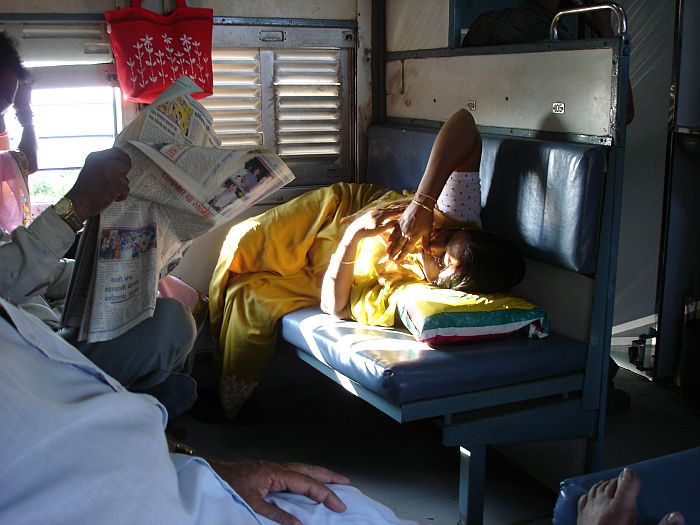
Sorry for the delay in replying. I was in transit for a full 2.5 days from central Kerala to Pune (pronounced POO-nuh - the official slogan is "City of Festivals," but they should consider "The nice city with the silly name") in Maharashtra state. Normally there is a 24 hour express train, but since an accident in May, the Konkan line is closed for repair (that's a good sign in India, if they actually stop to repair something). So I had to take the looooonnnnng - that is, more than 40 hours! - train trip in order to retrieve the correct documents, aka No Objection to Leave India Letter ("N.O.L." they call it), so that I can go to Sri Lanka, so that I can come back with a fresh Visa. I expect the whole procedure will take at least 2 more weeks.

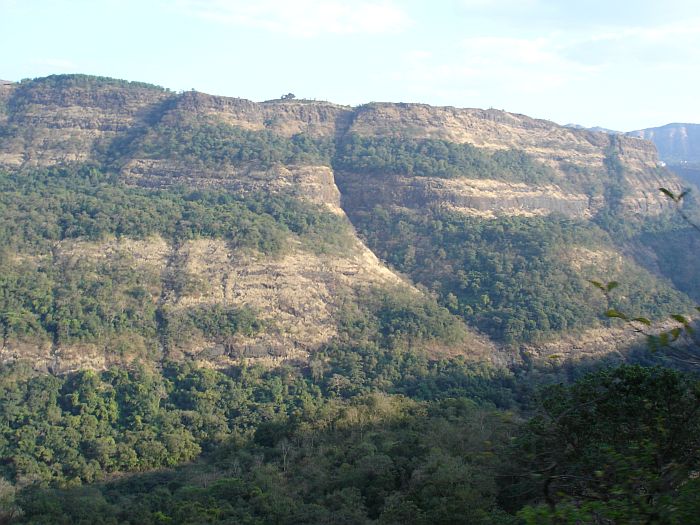
The first 7 hours of the train ride were lovely; we passed through the lush, verdant coconut-tree forests of Kerala and then through the foothills of the Western Ghat mountains. They look alarmingly like those of Tennessee - gentle, green and sloping, except that the valleys hold fresh spring-green rice paddies, banana trees and tapioca farms, not fields of tobacco and cotton, or shopping malls and parking lots.

Then there's a section on the Kerala/Tamil Nadu border where we reach the Ghats proper, and it's so dramatic - the mountains become wildly misshapen hills that look just like those in Chinese watercolors, warped green gumdrops welling up out of the steamy earth.

It's a magical stretch that's all too brief; after Ettimadai, the terrain alters drastically; there are 2/3 fewer trees and the suddently encroaching presence of The Sun - we're now in Tamil Nadu. Lettering on the sign-boards changes abruptly from the fat, squoonchy, playful curlicues of Malayalam (if a kid invented an alphabet solely for the purpose of being fun to draw, it would look like Malayalam) to the more upright, rigid cuneiform of Tamil (Malayalam's ancient ancestor and the grandaddy language of south India). Vannakam (welcome!)

As the sun sets behind the technicolor wedding-cake forms of Tamil temple spires, you fall asleep to the vendors' calls of "choy, choy...cap-eeee, cap-eee" - and awaken, 12 hours later, in the harsh, red, arid landscape of Andhra Pradesh. It's a seemingly endless state that knows no winter (and very little water)....even through the solar-guarded darkened train windows you can feel the oppressive glare of the sun. With the rocky hills in the distance and yucca-type vegetation, it really resembles the setting of a Western. The Andhra language (Telegu) is as musical and flowing as the landscape is dry and hard; the script itself looks like words on a psychedelic poster and seemingly every word ends in a vowel (usually OO), which has led to TeleGOO being dubbed "the Italian of the East."

Here the ubiquitous angry buzzing of motor-scooters, burly Tata trucks and mini cars falls away, to be replaced by bullock-drawn (Brahma Bulls, we call them in the west) produce carts with wooden wheels, piloted by ebony men with drooping moustaches and sweaty heads in turbans...scenes literally unchanged for centuries, if not a couple millenia. It became a surprise to even see the occasional scrawny telephone wire strung across the dusty plains.

Maharashtra: another state, another landscape, another culture, another cuisine, another language, another alphabet. The diversity of India is almost attention-deficit in quality and quantity; you get the impression of constantly flipping channels (even if I were to master Hindi, which I can read but not fully understand, the locals can always switch to Marathi or Urdu, both commonly spoken). Though Maharashtra (literally "great state") is technically part of the South, the influence of North India is more evident here in style of dress, cuisine, and number of Hindi speakers.


Today is Mahatma Gandhi's Birthday. "Vande mataram" (hail to the Motherland), the national anthem, blares from many a streetcorner.

Till Monday,
your faithful south Asian correspondent